
7 Reasons Growing Companies Choose an Expense Management Software Over Spreadsheets

Summary
As organizations scale, spreadsheets quietly become a financial risk. This article explains why growing enterprises shift to Expense Management Software to improve control, compliance, visibility, and reimbursement speed, while enabling finance leaders to manage spend strategically rather than reactively.
When spreadsheets stop keeping up with growth
For many finance teams, spreadsheets start out as a convenient solution. They are familiar, flexible, and appear cost-effective. But as companies grow across teams, cities, and partner networks, spreadsheets begin to show their limits. What once worked for tracking a handful of expense claims becomes a bottleneck that obscures visibility, slows reimbursements, and weakens financial control. Finance leaders today are under pressure to do more than process expenses. They are expected to protect cash flow, enforce policies consistently, and provide real-time insights into spending behavior. This is where the shift from spreadsheets to Expense Management Software becomes less of a technology upgrade and more of a governance decision.
Below are the key reasons why growing companies across India are making this transition.
1. Spreadsheets create blind spots as expense volumes rise
Spreadsheets are static by design. They rely on manual updates, delayed submissions, and version control that quickly breaks down as expense volumes increase. When employees submit expenses via email attachments and finance teams reconcile data across multiple files, visibility is always retrospective.
This delay has consequences. Many finance teams spend significant time chasing down missing receipts and correcting errors in manual expense processes. By the time leadership reviews the data, the spending has already happened. Expense Tracking Software changes this dynamic by capturing expenses at the source. Digital receipt uploads, real-time tracking, and centralized dashboards allow finance teams to see spending patterns as they emerge, not weeks later.
2. Manual approvals do not scale with organizational complexity
In growing enterprises, approval hierarchies become layered. Expenses may need validation across departments, projects, cost centers, or regions. Spreadsheets and email-based approvals struggle to keep up with this complexity.
Approvers lack context. Finance teams lack consistency. Employees face delays and lack clarity on the status of their claims. An automated Expense Approval System routes claims based on predefined rules, ensuring every expense follows the same governance framework. Approvals happen faster, escalations are visible, and accountability is clearly defined. This is especially critical for organizations operating through channel partner networks, where spend is distributed, and oversight must remain centralized.
3. Policy enforcement fails silently in spreadsheets
Expense policies often exist as PDFs or internal documents. In spreadsheet-driven workflows, compliance relies on human judgment at every step. This introduces inconsistency, fatigue, and risk. Weak internal controls contribute significantly to expense fraud and financial leakage, particularly in manual systems. Modern Expense Management Software embeds policy checks directly into the submission process. Employees are guided to comply before claims move forward. Out-of-policy expenses are flagged early, reducing rework and friction during approvals. For finance heads, this means fewer uncomfortable conversations and stronger audit readiness.
If this challenge feels familiar, you may want to read further on why Excel sheets are killing your expense-tracking workflow.
Still relying on spreadsheets for expense control?
See where policy gaps quietly emerge.
Assess your workflow now
4. Travel expense reimbursements expose spreadsheet limitations fastest
Travel Expense Reimbursement is often where spreadsheet systems break first. Travel involves multiple claims, variable categories, and time-sensitive reimbursements. Receipts get lost, and submissions are delayed. As a result, disputes become common. Delayed reimbursements negatively impact employee trust and productivity, especially in sales-driven organizations.
Expense Management Software simplifies this by enabling mobile submissions, automated validations, and real-time status tracking. Employees know where their claims stand. Finance teams gain confidence that reimbursements align with policy and budgets. For organizations with distributed sales or partner teams, this becomes essential rather than optional.
A deeper look at this challenge is provided in "Why Manual Travel Expense Reimbursements Are Costing You More Than You Think."
5. Reimbursements become a cash flow risk without real-time control
Expense Reimbursements are not just an HR concern. They directly affect cash flow forecasting and working capital planning. When expenses are processed in batches using spreadsheets, finance teams lose predictability. Unplanned spikes in reimbursements strain liquidity, and delays damage employee confidence.
With automated workflows and centralized reporting, Expense Management Software provides finance leaders with accurate reimbursement timelines and visibility into liabilities. This allows better cash planning and fewer surprises at month-end. This shift transforms reimbursements from a reactive task into a controlled financial process.
Struggling to predict reimbursement outflows?
Gain real-time expense visibility.
Drive efficiency now
6. Audit readiness cannot rely on scattered spreadsheets
Audits demand traceability. The finance team must know who approved what and when exceptions were allowed. It should be known why a policy was overridden. Spreadsheets rarely provide this context reliably. Files are overwritten, and emails go missing. Most explanations are informal.
Expense Management Software maintains detailed audit trails across submissions, approvals, and exceptions. This strengthens internal controls and simplifies external audits. For CFOs, this translates into lower audit risk and greater confidence in reported numbers.
7. Finance teams need insights, not just records
Perhaps the most important shift is strategic. Spreadsheets simply record expenses; they do not explain them. Growing companies need insights into spending behavior. They need to know which categories are rising, which teams exceed norms, and where policies need refinement.
Modern Expense Tracking Software turns expense data into actionable intelligence through analytics and reporting. This enables finance leaders to influence behavior, optimize policies, and support growth decisions.
This is where solutions like Zaggle are increasingly seen as benchmarks. By combining real-time visibility, embedded compliance, and intuitive reporting, Zaggle helps finance teams move from processing expenses to managing spend strategically, without disrupting existing workflows.
The strategic takeaway for finance leaders
The move from spreadsheets to Expense Management Software is not about digitization alone. It is about governance, visibility, and control in an environment where scale introduces complexity. For finance heads and CFOs, the question is no longer whether spreadsheets can track expenses. It is whether they can support faster growth without increasing risk. As organizations expand across teams and partner ecosystems, systems that embed control, transparency, and intelligence into expense workflows become foundational to financial performance.
Zaggle Admin
Expert contributor and editor at the Zaggle Knowledge Hub, specializing in corporate spend management, expense compliance, and B2B fintech solutions.
In This Article
You May Also Like

6 Things Great Business Expense Apps Get Right About Visibility and Control
Posted on : Jun 26, 2026
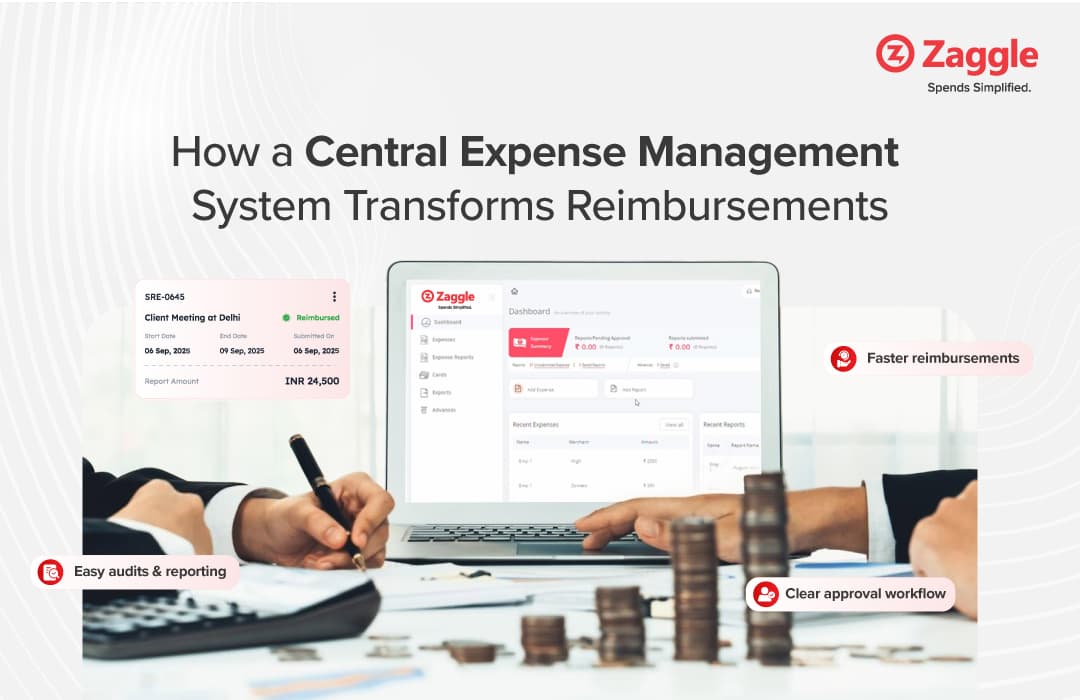
How a Central Expense Management System Transforms Reimbursements
Posted on : Jan 12, 2026
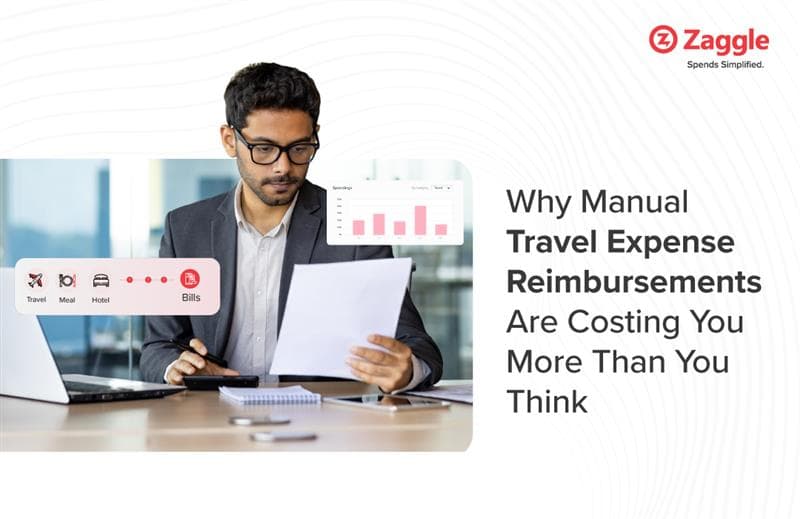
Why Manual Travel Expense Reimbursements Are Costing You More Than You Think
Posted on : Dec 23, 2025