
Diwali Bonus vs Gift Voucher: What Employees Value More in 2026
Summary
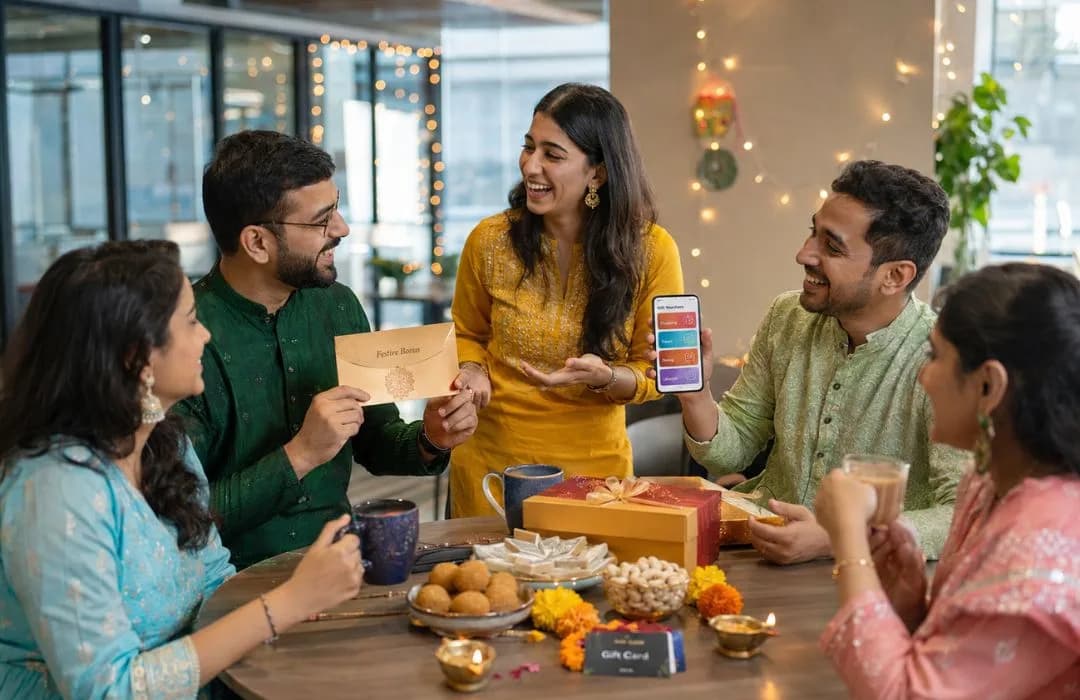
The Diwali bonus vs gift voucher debate is changing as employees expect greater choice and companies look for better ways to manage festive rewards. In 2026, the answer may lie in balancing financial value, personalization, employee experience, and enterprise control.
Diwali Bonus or Gift Voucher? It May Not Be That Simple Anymore
Every Diwali, companies face a familiar question – what should they gift their employees this year? There was a time when sweets or dry fruits did the job. Then came gadgets, home appliances, vouchers, curated hampers and the good old Diwali bonus for employees. All of them have their merits. But they also have one basic limitation. The company is deciding what hundreds or thousands of different people should value.
That makes the Diwali bonus vs gift voucher question more interesting in 2026. Because perhaps the better question is not what employees should receive, but how much choice they should have.
Key Takeaways
Cash is difficult to beat for freedom and practical value.
Gift vouchers can make a Diwali reward feel more like recognition and less like another salary credit.
Employee choice, personalization and digital rewards are becoming more relevant as workforces become larger and more distributed.
Companies also need to think about participation, utilization, budget governance and the ability to manage rewards consistently at scale.
Why Is a Diwali Bonus for Employees Still So Attractive?
Let's start with the obvious. A Rs. 5,000 bonus is Rs. 5,000 that an employee can use exactly as they want. Someone may spend it on Diwali shopping. Someone else may book tickets home. Another employee may pay a bill, buy something for the family, or simply keep the money in the bank. Cash doesn't come with instructions.
A Blackhawk Network survey of 2,000 US workers, reported by SHRM, found that 66% wanted bonuses compared with 41% who wanted prepaid or gift cards. It is a US study, so we shouldn't use it to speak for Indian employees. But the broader preference is for financial freedom. There is another distinction worth making. A performance-linked or statutory bonus and a Diwali gift don't necessarily serve the same purpose. One may be part of compensation or a legal entitlement. The other is usually intended as festive appreciation. And mixing the two can make the discussion unnecessarily confusing.
Is Diwali Bonus Mandatory in India?
This is one of the most common questions employees and employers search for around the festive season. There is no blanket rule that simply makes a separate “Diwali bonus” mandatory for every employee in India. However, eligible employees may have statutory bonus entitlements under applicable labor laws, subject to prescribed conditions. That distinction is important.
A company voluntarily giving employees a festive bonus, voucher or gift is different from fulfilling a statutory bonus obligation. Similarly, the Diwali bonus calculation should not automatically be treated as a discretionary festive reward. Statutory bonus calculations depend on the applicable legal framework, eligibility and salary or wage criteria. Companies should therefore determine the nature of the payment before deciding how to calculate or communicate it. They must consult their legal or HR experts to ensure compliance with applicable statutory bonus requirements.
Gift Voucher vs Cash Bonus: Why Consider a Voucher at All?
Because a gift can do something cash doesn't always do. Salary comes into an account. Bills go out, and groceries get bought, while EMIs get paid. A cash bonus can easily become part of the same cycle.
A festive voucher creates a slightly different moment. There is something to receive, something to choose, and hopefully something to enjoy. The problem starts when choice becomes too narrow. A voucher for one particular brand may be perfect for one employee and almost useless to another. The same applies to a beautifully curated hamper containing products the recipient doesn't need.
Research cited by SHRM found that 70% of employees considered recognition most meaningful when personalized. India's gift-card market, meanwhile, was estimated by Research and Markets at US$10.45 billion in 2025 and is projected to reach around US$18.03 billion by 2029.
These trends make vouchers worth considering, but they don't necessarily make them better than cash. Cash offers unrestricted choice. Vouchers can create a more distinct gifting experience and offer varying degrees of choice depending on how they are designed. Ultimately, what works better depends on what the employee values and what the company wants the festive reward to achieve.
Want to offer more choice without complicating Diwali gifting?
Explore Zaggle.
Is Choice Becoming the Bigger Diwali Gifting Trend?
Look at how corporate gifting has changed. We started with sweets and dry fruits. Then came appliances, gadgets, branded merchandise, and curated hampers. Gift cards opened up more possibilities. Digital rewards made distribution easier. Now we seem to be entering the next phase: don't just give employees more options, let them choose.
The shift was already visible during Diwali 2025. The Economic Times reported that companies are exploring wellness experiences, travel vouchers, skill-building subscriptions, customized hampers, and sustainable products alongside conventional festive gifts.
For a company with 5,000 employees, perhaps HR doesn't need to find a single brilliant gift that everyone will love. That is a fairly impossible brief anyway.
Large enterprises are increasingly taking a more flexible route. A company with employees across multiple cities, for instance, could offer a digital rewards catalog where everyone gets the same festive budget but chooses between shopping, dining, travel, wellness, or other options. Another may combine approaches, offering digital vouchers to remote and field employees while giving office-based teams a choice of physical or digital rewards.
A better approach, therefore, could be a rewards catalog or a range of digital vouchers that allow employees to choose from within a defined budget. It also works better for today's reality of a remote, distributed Pan-India workforce. An employee at headquarters, a remote employee working from a smaller city, and someone in a field sales role may have very different needs. Even regional preferences can vary. The point isn't to create a separate gifting program for everybody. It is to stop assuming that everybody wants exactly the same thing.
Looking beyond bonuses and vouchers? Explore the Top 10 Corporate Diwali Gifting Trends Indian Companies Are Following in 2026.
So, Which Wins: Gift Voucher vs Cash Bonus?
There is no single answer. Cash may be the obvious choice for one employee, while another may enjoy receiving something specifically meant for Diwali. One simple way to look at the decision is through five factors that make up the VALUE framework.
Cash Bonus | Flexible Gift Voucher | |
|---|---|---|
Versatility | Spend or save anywhere | Depends on available choices |
Appreciation | Valuable, but can merge with compensation | Creates a distinct festive reward |
Lifestyle relevance | Completely decided by the employee | High when categories and brands are broad |
Utility for the company | Relatively straightforward | Can support controlled digital distribution |
Experience | Primarily financial | Combines value with a recognition moment |
Administrative effort | Simpler when processed through existing payroll systems | May require more setup, but digital platforms can simplify distribution, tracking and reporting |
For someone managing immediate household expenses, cash could easily win. Someone else may happily use a voucher for a purchase they had been putting off. Another employee may prefer travel, dining, wellness, or an experience. That is why the Diwali bonus vs. gift voucher decision shouldn't be only about which reward looks better on paper. It should also consider who is receiving it.
Still exploring your options? Discover 25 Corporate Diwali Gifting Ideas for Clients, Employees and Partners.
What Should HR and Finance Measure After Diwali?
This is where festive gifting can become more useful as an employee engagement and Rewards & Recognition initiative. Many organizations track whether rewards were distributed successfully. Fewer ask what happened after distribution. For digital rewards, companies can look at practical KPIs such as:
Redemption rate: How many employees actually redeemed their reward?
Employee participation: Did people actively engage with the choices offered?
Utilization: Which categories, brands, or reward types were actually used?
Employee satisfaction: Did employees find the reward relevant and easy to use?
Over time, redemption analytics can reveal useful patterns. Perhaps travel rewards perform better with one employee group while shopping or dining is preferred elsewhere. Regional trends may emerge. Category performance may also help HR understand whether employees are actually using the choices being offered. More importantly, these insights can make next year's gifting decisions a lot less dependent on guesswork. Low redemption may suggest that the choices were too limited or the redemption process was difficult. Strong preference for certain categories can help HR decide what to retain or expand. Regional patterns can help fine-tune the rewards mix, while participation and satisfaction scores can indicate whether the overall program is working.
That means next year's budget, reward catalogue and employee communication can be shaped by what people actually used and valued this year. The idea isn't to turn Diwali gifting into another dashboard. It is simply to learn from one year before planning the next.
Want better visibility into how employees use their rewards?
Explore how Zaggle can simplify digital rewards, redemption, and reporting at scale.
More Choice Shouldn't Mean More Work for HR
Choice sounds wonderful when there are 50 employees. It gets a little more complicated when there are 500, 5,000, or 50,000 of them across offices, remote locations, and field teams.
Someone still has to decide who is eligible. Budgets require approval, and rewards must reach people on time. Eventually, finance needs to know where the money went. There are different concerns across teams too. HR wants the initiative to contribute to employee engagement and recognition. Finance needs budget control and reporting. Procurement wants a process that doesn't involve managing too many vendors. And employees simply want the whole thing to be easy. This is where employee reward and recognition platforms can be useful.
For instance, a company may decide that all eligible employees receive a reward within a certain budget, while long-tenured employees receive a higher amount. An approval workflow can handle exceptions. Digital vouchers or prepaid rewards can then be distributed instantly, with the transactions captured for reporting and audit purposes. The mechanics stay largely in the background. Which is exactly where they should stay.
The real challenge, then, is not offering more choice. It is making that choice manageable at scale. A well-designed rewards program should make it easy for employees to choose while giving HR and finance the visibility, budget control and reporting they need.
This is the balance that platforms such as Zaggle are designed to support, especially for enterprises managing rewards across offices, remote employees and field teams across India.
The Best Diwali Gift May Be the Freedom to Choose
So, where does the Diwali bonus vs gift voucher debate leave companies in 2026? Cash continues to offer something very difficult to compete with: complete financial freedom. Gift vouchers can make the reward feel more like a Diwali gesture than just another credit to the salary account. And flexible digital rewards can bring choice into the equation.
For enterprises, the next step is making that choice manageable. Who is eligible? What is the budget? Can rewards reach employees across locations? Are people actually using them? And can what we learn this year help us plan better next year? These are fairly practical questions. But answering them well can make a big difference to how a Diwali reward is received. Because finding one perfect gift for everyone is getting harder. Giving people the freedom to find their own may be a better idea.
Planning Diwali rewards for your employees?
Explore how Zaggle can make gifting simpler, flexible, and scalable
FAQs
1. Is Diwali bonus mandatory in India?
A separate festive payment, called a Diwali bonus, is not automatically required for every employee in India. However, eligible employees may be entitled to statutory bonus payments under applicable labor laws, subject to prescribed conditions. Employers should distinguish statutory bonus obligations from discretionary festive bonuses, vouchers or gifts and seek appropriate professional advice where required.
2. How is Diwali bonus calculation done?
There is no single Diwali bonus calculation applicable to every organization. A voluntary festive bonus may be determined by company policy, while statutory bonus calculations are governed by applicable labor laws, eligibility conditions and prescribed wage or salary criteria. Employers should first establish whether the payment is statutory, contractual or discretionary before calculating it.
3. Which is better: gift voucher vs cash bonus?
Cash offers maximum flexibility because employees can spend or save it wherever they choose. Gift vouchers can make the reward feel more distinct and celebratory, particularly when employees can choose from several brands or categories. The better option depends on whether the company's priority is financial flexibility, recognition, employee choice, or a combination of these.
4. Why are companies using digital gift vouchers for Diwali?
Digital vouchers can be delivered quickly to employees across offices, remote locations and field teams without the logistics associated with physical gifts. They can also provide mobile redemption and greater employee choice. For large organizations, digital administration can make eligibility, budget controls, distribution and reporting easier to manage.
5. How can companies measure whether employees liked their Diwali gifts?
For digital rewards, organizations can track redemption rates, participation, utilization, and category preferences. Employee surveys or satisfaction scores can provide another layer of feedback. Looking at these measures together can help HR understand whether employees actually valued and used the reward rather than simply confirming that it was distributed.
6. How can large companies personalize Diwali gifting?
Personalization doesn't require buying a unique gift for every employee. Companies can offer a reward catalog with different categories, use regional or multilingual festive communication, or vary rewards by defined criteria such as tenure or employee groups. The objective is to offer relevant choices while keeping the program practical to administer.
7. Can companies give gift vouchers instead of a Diwali bonus?
Companies can offer gift vouchers as part of a discretionary Diwali rewards or gifting program. However, a gift voucher should not automatically be treated as a replacement for any statutory or contractual bonus to which an employee may be entitled. Employers should first distinguish between a festive reward and a bonus payable under applicable laws or employment terms.
8. How much Diwali bonus should a company give employees?
There is no standard amount for a discretionary Diwali bonus for employees. Companies may decide the amount based on their rewards policy, available budget, employee level, tenure or other defined criteria. Where statutory bonus provisions apply, however, the calculation and eligibility need to follow the applicable legal requirements rather than the company's festive gifting policy.
9. How can companies manage Diwali rewards for employees across India?
For a pan-India workforce, digital rewards can avoid many of the logistical issues associated with physical gifting. Companies can centrally define employee eligibility and budget limits, use approval workflows, and distribute digital vouchers or rewards to employees across offices, remote locations, and field teams. Redemption and utilization data can then help with reporting and future planning.
10. Should employees be allowed to choose their own Diwali gift?
For larger and more diverse workforces, choice can make a festive reward more relevant. Instead of selecting a single gift for everyone, companies can offer a curated rewards catalog, digital vouchers, or distinct reward categories within a defined budget. Employees get something they are more likely to use, while the organization can still maintain budget and policy controls.
11. Are Diwali gift vouchers taxable for employees in India?
The tax treatment of a Diwali reward can differ depending on whether it is given as cash, a gift voucher or another benefit. Cash bonuses are generally treated as part of taxable salary, while employer-provided gifts and vouchers are subject to specific income-tax rules and conditions. Companies should therefore consider the structure and value of the reward and seek appropriate tax advice before finalizing their Diwali gifting program.
Zaggle Admin
Expert contributor and editor at the Zaggle Knowledge Hub, specializing in corporate spend management, expense compliance, and B2B fintech solutions.
In This Article
You May Also Like

15 Diwali Employee Engagement Activities That Go Beyond Gifting
Posted on : Sep 10, 2026

Digital Gift Cards vs. Physical Gifts: Which Delivers a Better Employee Experience This Diwali?
Posted on : Sep 2, 2026
Top 12 Diwali Gift Ideas for Frontline and Factory Employees in 2026
Posted on : Aug 26, 2026