
Best Source-to-Pay Software in 2026: How to Evaluate and Shortlist
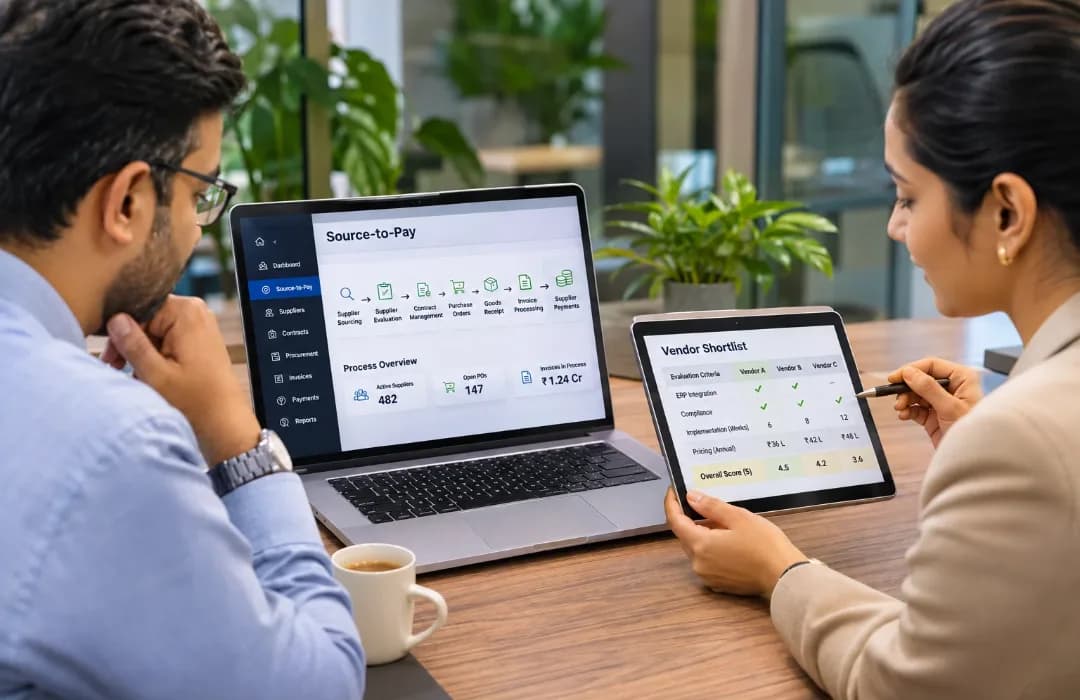
When looking for the best source-to-pay software, you'll often find ranked lists. If you're actively evaluating vendors, you need a shortlist you can defend against your organisation's requirements, not a ranking based on someone else's priorities. They’re easy to read but not very helpful. The ranking has no idea what you buy, what ERP you use, how many of your suppliers are micro or small businesses, or how many people are in your AP team.
A platform that suits a 200-crore manufacturer with 800 vendors and a goods-heavy spend profile will likely not suit a services business with 40 suppliers and no goods receipt step at all, though both are shopping for source-to-pay solutions. The question is not which product wins. It is which product fits your size, spend type, ERP and compliance requirements, based on measurable factors such as workflow coverage, integration needs and total cost.
Why the Best Source-to-Pay Software Depends on Your Business
Weigh the four variables that are most important in this decision:
Company Size and Transaction Volume
A company that processes 300 invoices per month is not the same as a company that processes 8,000 invoices per month. Higher volumes may justify automation. Compare pricing by users, transactions and entities, including future growth.
What You Buy
Purchase orders, goods receipt notes and 3-way matching are required for goods-heavy spend. In a services business, a platform that is tightly coupled to GRNs can be cumbersome, as services-heavy spend runs on milestones and acceptance records. Budgeting should be done by site or project, not just by department for project-based companies. Check that the platform supports the workflows your business actually uses.
Your ERP
Check compatibility with your ERP's edition, version and deployment model. Ask vendors to demonstrate key data flows and disclose any middleware or customisation costs.
Compliance Load
A business above the e-invoicing threshold with a large base of MSME suppliers has obligations while a business below the threshold does not. Check whether the platform supports the compliance checks your business needs and flags exceptions for review.
Assessment Principles That Count
Score all shortlisted S2P platforms against the same list. There are eight criteria that cover most of the important things.
1. Coverage of the S2P Stages
Ask the vendor to map the platform's coverage from sourcing and contracting to supplier payment. Request a demonstration of each stage. A lot of these products are procure-to-pay solutions that include a supplier portal. While this isn’t wrong, know what you’re purchasing right from get-go.
2. Indian Tax and Compliance Handling
This is where global products are often ineffective. During onboarding, check how the platform supports GSTIN validation, GSTR-2B reconciliation, e-invoice verification and MSME payment tracking. These features can help your team run checks, track deadlines and flag exceptions. However, the platform alone cannot guarantee compliance. Your team must review flagged issues and ensure statutory obligations are met.
On e-invoicing, note that taxpayers with aggregate annual turnover of ₹10 crore and above must report invoices to the Invoice Registration Portal within 30 days of the invoice date, a limit that applies from 1 April 2025. Ask the vendor to demonstrate deadline alerts and exception reports for unreported invoices.
3. ERP Integration
Ask the vendor to demonstrate vendor master synchronisation, a failed sync and its recovery. Request details of data flows, sync frequency, configuration requirements and who resolves errors. Duplicate vendor records are among the most difficult integration issues to resolve once they’ve spread across a year of transactions.
4. Implementation Time and Internal Effort
Don’t just ask for the vendor’s timeline. Request a written implementation plan covering milestones, dependencies, client-side effort and ownership. Ask how many of your people they need, for how long and what would happen to the schedule if your master data was messy.
5. Usability and Adoption
Whether a project ends up being a success or failure may be based on the decisions of the approver who signs off 40 invoices per month. Ask the vendor to demonstrate a typical approval workflow and let your team test it. When the approval screen has to be trained before it can be used, adoption is the issue, not the technology.
6. Pricing Model and Total Cost
Consider whether the cost is calculated by user, transaction or module or if there is a platform fee. They all behave differently as your organisation grows. Request itemised first- and third-year costs, including implementation, integration and support, with user and transaction growth assumptions.
7. Support and Service Levels
Ask where support is based, its operating hours and how critical issues are escalated. Request a written SLA confirming response and resolution commitments, particularly for failed payments at month-end.
8. Security and Data Protection
Digital Personal Data Protection Rules were notified in November 2025 with a phased compliance timeline. Vendor obligations around personal data are only tightening with each year. Ask where your data is stored, who can access it and what controls protect it. Request details of the incident response and breach notification process.
Also read: S2P Process for Indian Businesses: From Sourcing to GST-Compliant Supplier Payment
Simple Scoring Framework
Weight the following criteria before you see any demos:
Criterion | Weight | Score (1–5) | Weighted |
Coverage of S2P stages | 15% | ||
Indian tax and compliance | 20% | ||
ERP integration | 15% | ||
Implementation time and effort | 10% | ||
Usability and adoption | 15% | ||
Pricing and total cost | 10% | ||
Support and service levels | 10% | ||
Security and data protection | 5% | ||
Total | 100% |
The weights mentioned above suit a mid-size Indian business with a meaningful compliance load. Change them to match your situation. A company running a heavily customised SAP instance may push ERP integration to 25%. One with a scattered, low-value supplier base might weight usability higher, because adoption is the real risk.
Score each platform out of five per criterion, multiply by the weight, and total. What this does is force the trade-offs into the open, and allows you to actually consider the best source-to-pay software.
Questions to Ask Source-to-Pay Providers
Demos are often rehearsed and polished. These questions are harder to fool, because each one asks the platform to show something going wrong.
Show me a three-way match that fails. What does the exception queue look like, and who gets notified?
How does the platform handle an invoice that doesn’t appear in GSTR-2B?
Walk me through MSME due-date tracking from the acceptance date, not the invoice date.
TDS provisions move to the Income-tax Act, 2025 from 1 April 2026. How does the system handle transactions that straddle the two regimes?
Which parts of this are configurable by my team, and which need a change request?
What is the all-in first-year cost, including implementation, training and integration?
Are there any charges beyond the quoted price?
What does data migration include, and does it cost extra?
What customisations incur additional charges?
How are critical support issues escalated?
Can the platform handle growing transaction volumes without significant extra costs?
Give me two reference customers of my size, in my industry, on my ERP.
Your Shortlisting Checklist
Consider having a final go/no-go check before advancing a vendor to the final evaluation stage. Before signing anything, you should have:
A sandbox test using your own vendor master, POs and invoices
Two reference calls with businesses of similar size and ERP
A written implementation plan naming your internal effort and owners
All-in first-year and third-year costs, with the growth assumptions stated
Confirmation of how GST, TDS and MSME obligations are handled today
Confirmation of the vendor’s complete S2P scope, including the processes and features covered and any exclusions
Confirmation that the platform meets your security and data protection requirements
A written service-level agreement (SLA) covering support and service commitments
Complete commercial terms, including licence fees, implementation, integrations, renewals and any additional charges
Clear ownership of implementation, integration, ongoing support and issue resolution
Advance the vendor to final evaluation only when these requirements are met and documented. If the vendor cannot confirm a critical requirement or provide the necessary commitments in writing, treat it as a no-go
Zaggle’s Source-to-Pay platform offers sourcing, procurement, purchase orders, goods receipts, invoice processing and supplier payments in one place, which means the GSTIN, PAN and MSME status captured at onboarding are the same records the invoice and payment stages run on. Book a demo today to see how it can help your enterprise maintain compliance and best practices in accounting supporting both cost savings and ironclad controls.
Frequently Asked Questions
What is the best source-to-pay software for Indian businesses?
There is no one right answer, as it is dependent on company size, spend type, ERP and compliance load. The best way to choose it is to assign weights to these criteria for your business and rate each of the shortlisted platforms against them. Then run a test with your own data on the platforms you’ve narrowed down before committing to anything.
What questions should I ask source-to-pay providers during a demo?
Request failure cases instead of clean flows. For instance, ask about what happens when a three-way match fails, an invoice that is not available in GSTR-2B, an MSME due date is approaching. Ask what is adjustable and for references of your size and ERP.
What is the time frame for implementing an S2P platform?
It depends on the number of integrations, the state of your master data and how many approval workflows need configuring. Rather than accepting a headline timeline, ask the provider to break it down by stage and name what your team has to deliver at each one.
Do we need an S2P platform if we already have an ERP?
Not always. The ERP remains the system of record, and an S2P platform adds the sourcing, approval and invoice workflow around it. This matters most when volumes are high or compliance checks are still being done by hand.
Zaggle Admin
Expert contributor and editor at the Zaggle Knowledge Hub, specializing in corporate spend management, expense compliance, and B2B fintech solutions.
In This Article
You May Also Like
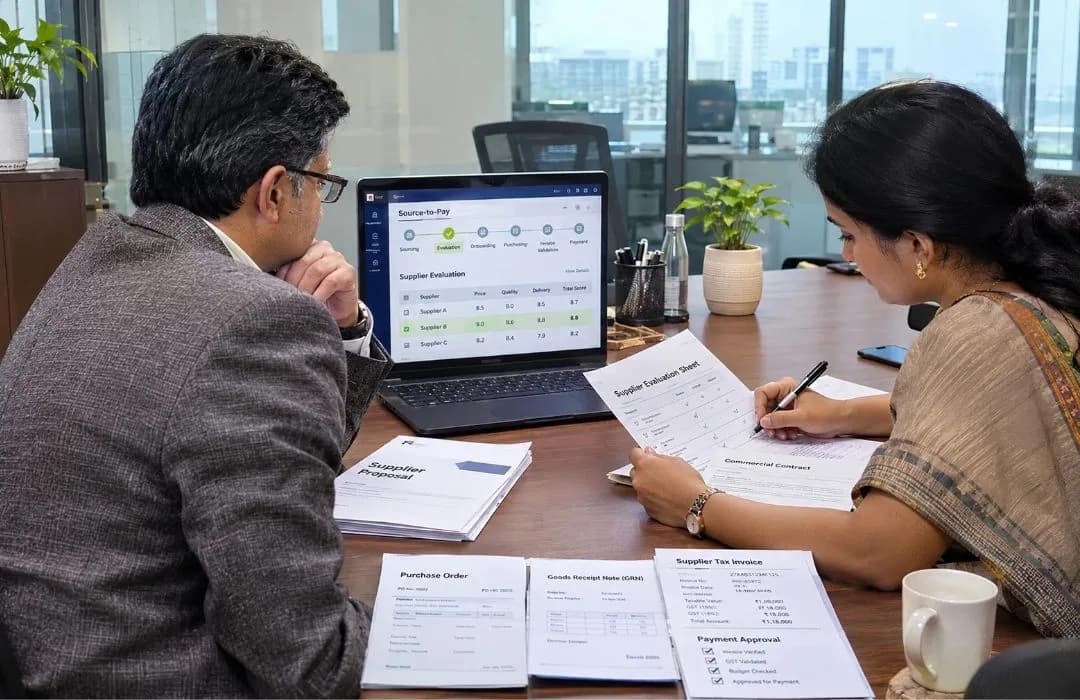
S2P Process for Indian Businesses: From Sourcing to GST-Compliant Supplier Payment
Posted on : Nov 20, 2026
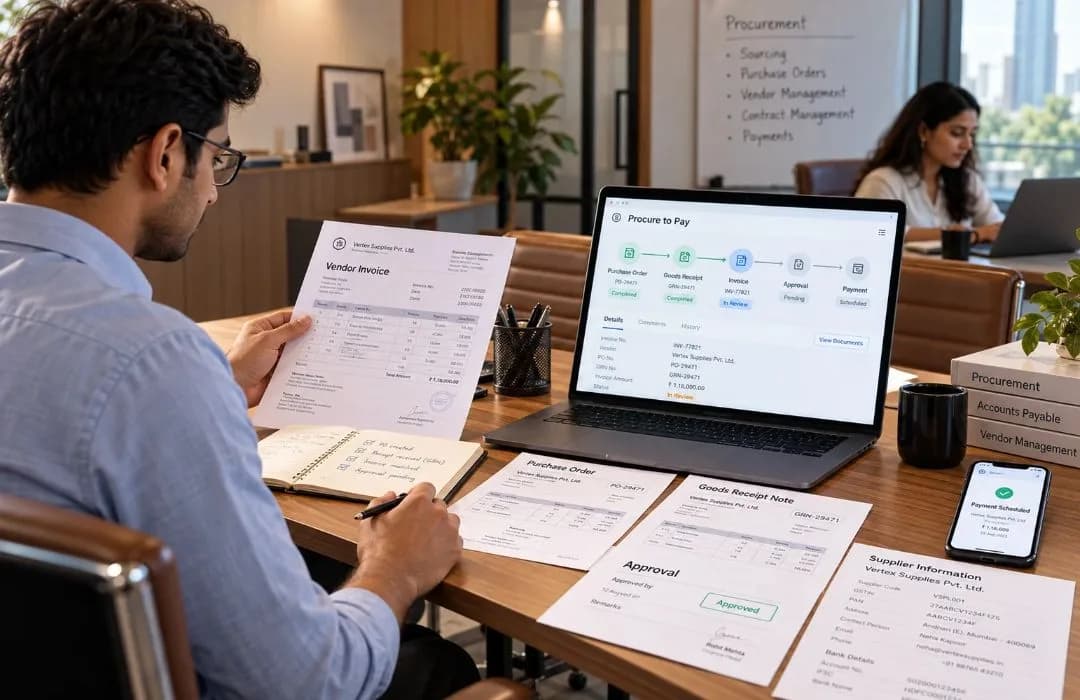
8 Approaches That Accelerate and Secure Vendor Payments Efficiently
Posted on : Oct 12, 2026
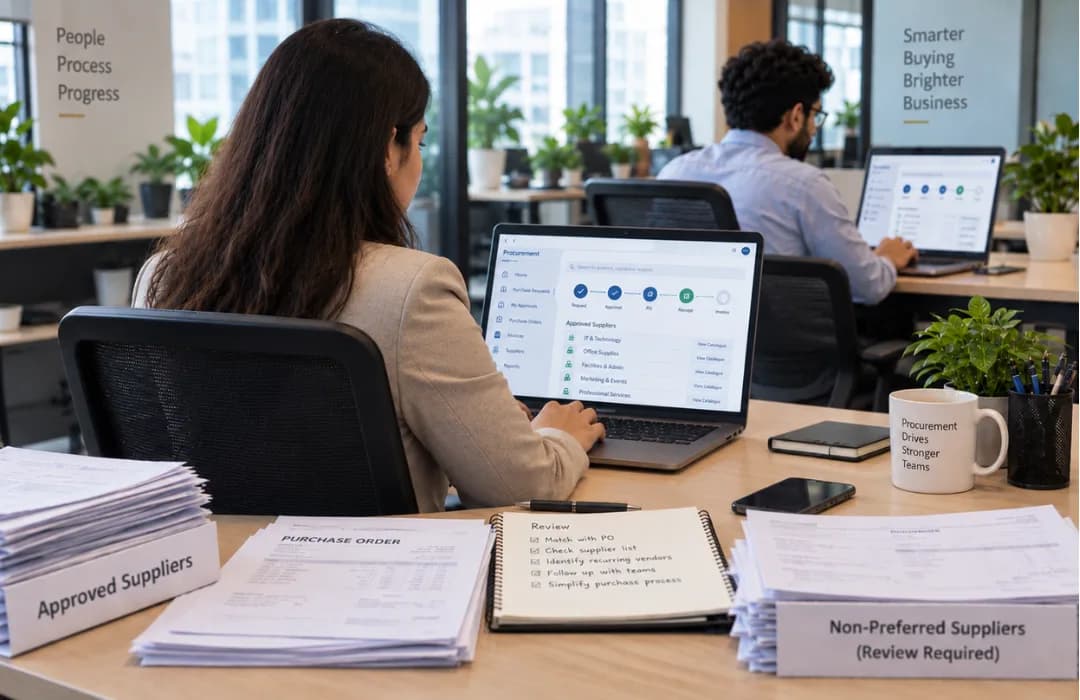
What Is Maverick Spending and How Can Procurement Teams Eliminate It?
Posted on : Sep 18, 2026