Choosing the Right Employee Benefits Card: Features Employers Should Compare
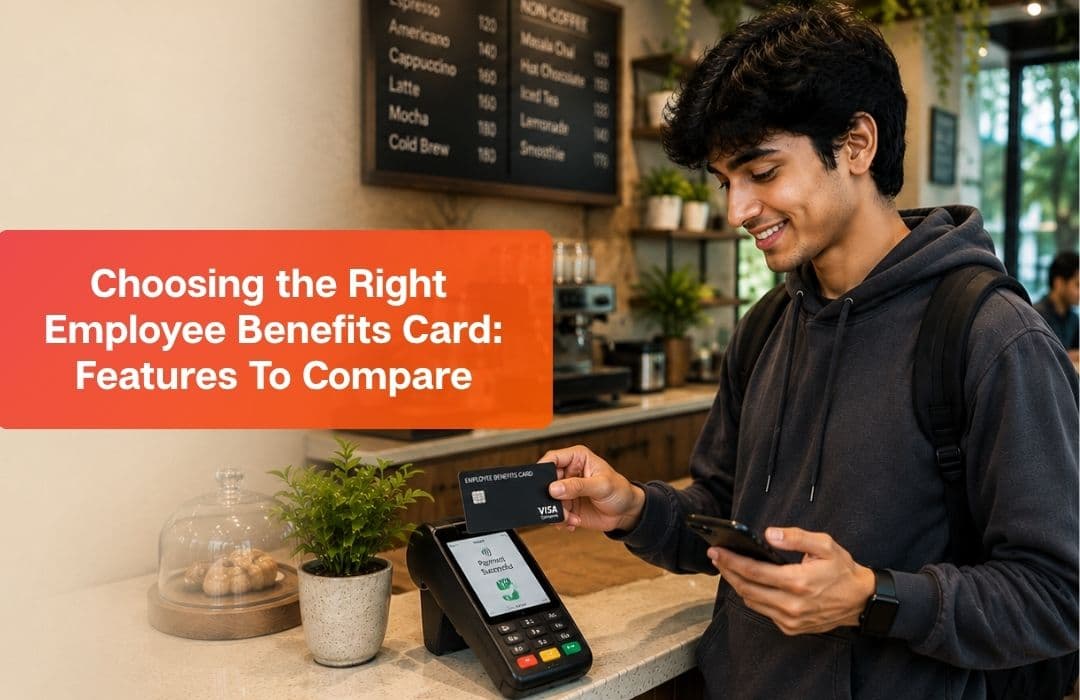
Employee benefits are meant to be simple to use. In reality, they are often not.
Employees may have to deal with limited acceptance or unclear usage rules. Even basic benefits like meal allowances can become difficult to use in daily life.
For employers, the challenge is different. Managing benefits across systems and employees with different perks can be time-consuming. Manual processes and limited visibility make it harder to track usage and control costs.
Employee benefits cards were introduced to simplify this. They bring multiple allowances into a single card. Employees can use their benefits more easily, while employers get better structure and control.
With evolving regulatory frameworks such as the Draft Income-tax Rules, 2026, the way employee benefits are valued and taxed may also continue to change over time. This makes it even more important to choose a flexible and well-structured solution in 2026.
A strong employee benefits card can help organisations adapt to changing tax rules while ensuring employees continue to receive practical, usable benefits. A clear employee benefits card comparison helps organisations understand what to look for. By focusing on the right employee benefits card features, businesses can choose a solution that works well in practice – not just on paper.
What Actually Matters When Comparing Employee Benefits Cards
A benefits card should be easy to use. It should also reduce effort for internal teams. The right balance between usability and control is key when evaluating employee benefits card features. Here’s how to get started when evaluating cards:
Focus on Usability For Consistent Adoption
A benefits card only delivers value when employees use it regularly. Restrictions such as limited acceptance can often reduce usage. Minimum transaction limits can also be inconvenient. Over time, employees may stop using the benefit altogether.
Modern options usually do away with these barriers. Choose cards that employees can use without worrying about too many conditions. This improves trust and encourages regular use.
Choose a Card with Wider Acceptance
Acceptance is one of the most important factors in any benefits programme. Cards that work within a closed network limit where employees can spend. This reduces flexibility and makes the benefit less practical.
Cards with wider acceptance offer a better experience. Employees can use them across restaurants, supermarkets, and neighbourhood stores. This aligns with everyday spending habits, making the benefits more relevant.
Evaluate Efficiency for HR and Finance Teams
Traditional benefits systems often involve manual steps. Benefits are loaded separately. Reports are created later. Data is not always available in real time. Modern platforms improve this process by linking physical cards to digital tracking.
Choose a card where a team can automate the distribution of benefits. Instant availability of usage data and reporting also speeds up internal efficiency. The idea is to choose a card that is easy to manage while facilitating better decision-making.
Check Integration to Support Growth
If a benefits card does not integrate with HR or payroll systems, teams must rely on manual updates. This increases the risk of errors and slows down processes.
Integrated employee benefit solutions solve this problem. They allow data to move smoothly between systems. This ensures accuracy and supports scalability, which is why they must be a team’s first choice.
Assess Cost Transparency and Compliance
Hidden charges, inactivity fees, or inconsistent pricing are things of the past. Choose a card that ensures costs are clear. Also ensure that the card aligns with regulatory requirements when it comes to benefits and savings for employees. It should also offer secure transactions to protect both the organisation and its employees.
Zaggle Employee Benefits Card: How It Stands Out
Focusing on simplicity, flexibility, and control, the Zaggle Employee Benefits Card is designed to overcome common challenges in the management of employee benefits.
Benefits For Employees:
Single card, multiple benefits: Employees do not need to manage different cards. All benefits are available in one place.
No minimum spend restriction: The card can be used for both small and large transactions. This makes it practical for daily use.
Wide acceptance: It works across restaurants, supermarkets, and local stores. Employees can use it freely.
Access to offers and savings: Store and brand discounts increase the overall value of the benefit.
Simple digital experience: The mobile app allows employees to check balance and track transactions easily.
No bill upload requirement: Employees do not need to submit bills after transactions. This saves time and effort.
Benefits For Employers:
Automated benefit distribution: Benefits can be loaded quickly without manual intervention.
Real-time visibility: Employers can track usage and spending patterns as they happen.
System integration: The card integrates with HR and payroll systems. This reduces manual work and improves accuracy.
Digital onboarding: The KYC process is fully digital. This makes onboarding faster and more efficient.
Compliance and security: The system follows regulatory guidelines and ensures secure transactions.
Built-in expense management: Reporting and tracking are integrated into the platform. This improves financial control.
Making a Future-Ready Choice
Choosing a benefits card requires a clear understanding of how different solutions perform in real scenarios – from ease of use and administrative control. A thoughtful comparison helps organisations identify gaps that may not be visible at first glance.
As tax frameworks and workplace expectations continue to evolve, the right card can make a significant difference. A well-designed solution not only improves the employee experience but also ensures consistency, scalability, and better cost management for employers.
Solutions such as the Zaggle Employee Benefits Card reflect this shift. It brings together flexibility, usability, and control, helping organisations move towards a more practical and future-ready benefits structure.
Frequently Asked Questions
What is an employee benefits card?
It is a prepaid card used to offer employee allowances. These may include meals and other benefits. It simplifies access and reduces the need for manual reimbursements.
Why should employers compare employee benefits cards?
Every employee benefits card features different levels of flexibility and usage. Comparing options helps employers choose a card that fits their needs and improves overall efficiency.
What should employers look for in an employee benefits card?
They can focus on a card’s usability, acceptance across merchants, automation, integration, and compliance. These factors determine how effective the benefits programme will be.
How does the Zaggle Employee Benefits Card help employees?
It provides a simple way to use benefits. Employees can access multiple allowances through one card and use it across a wide range of merchants.
How does the Zaggle Employee Benefits Card help employers?
It reduces manual work through automation and integration. It also provides better visibility into usage and supports compliance.
Zaggle Admin
Expert contributor and editor at the Zaggle Knowledge Hub, specializing in corporate spend management, expense compliance, and B2B fintech solutions.
In This Article
You May Also Like
Employee Benefits Cards Explained: Key Features and Differences Employees Should Know
Posted on : Jun 16, 2026
How Device-Led Employee Benefits Create High Impact Without Additional Budget Burden
Posted on : Jun 12, 2026
When 'Zero Cost to Company' Cards Actually Cost Employees
Posted on : Jun 10, 2026