
How a QR-based System Reduces Reconciliation Efforts for Retail Firms
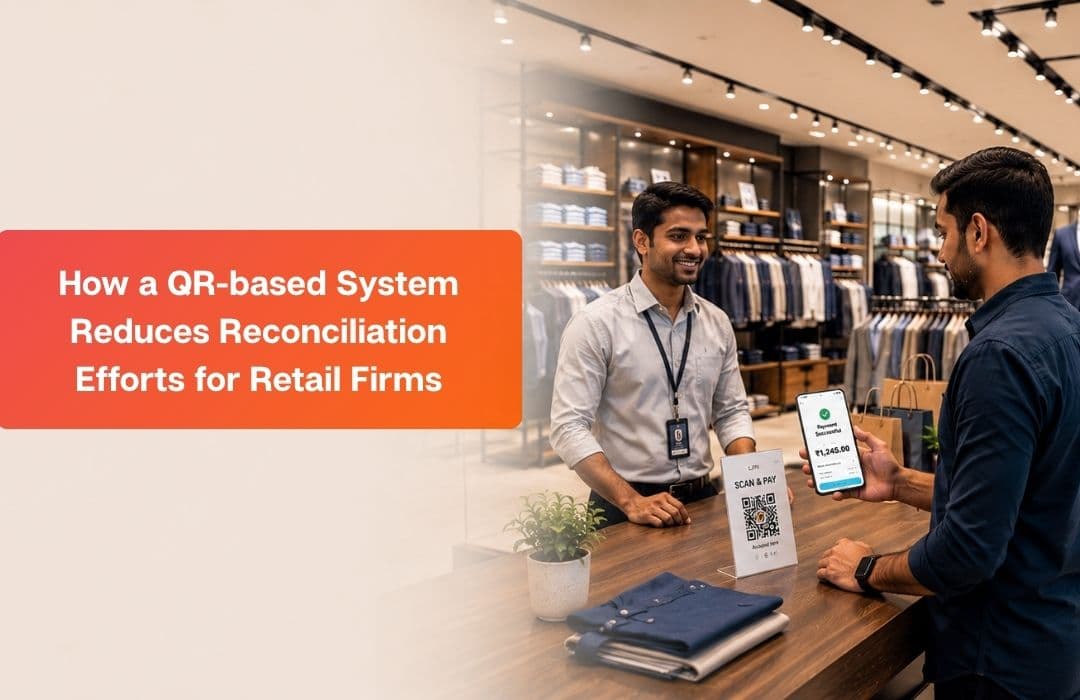
QR-based payments are no longer a new concept for retail firms. From neighbourhood stores to national chains, scanning a code to complete a transaction has become routine. What is less discussed is how this shift impacts what happens after the payment is made, especially during reconciliation.
As QR payments continue to scale, with a projected CAGR of 13.87% between FY2026 and FY2033, their role is expanding beyond customer convenience. With over 657.9 million QR codes deployed in India by FY2024 to FY2025, and nearly 75% of them active in Tier 2 and Tier 3 cities, QR systems are now deeply embedded in everyday retail operations.
This widespread adoption highlights more than speed and ease. It reflects a growing need for reliable, traceable, and cashless management of transactions. Globally, 44.6% of internet users scan at least one QR code every month, reinforcing how digital-first payments are shaping retail workflows.
For retail firms managing multiple stores, the real challenge begins after the transaction. Reconciliation, visibility, and control often lag behind payment innovation. This is where QR-based systems start delivering value beyond the checkout counter.
Why Expense Reconciliation Is Especially Complex in Retail Firms
High transaction volumes and manual processes make expense reconciliation particularly challenging in retail firms. High transaction frequency, multiple locations, and manual processes add layers of complexity that slow down finance teams and affect cash flow management.
High Transaction Volumes
Retailers face massive daily transaction inflows from sales, returns, and adjustments across physical and digital channels. Each transaction needs to be recorded and matched with bank entries.
When volumes rise, even small mismatches take time to trace. Finance teams often spend hours identifying where gaps occurred, especially during peak business periods.
Manual Reconciliation Effort
In many retail setups, reconciliation still relies on manual work. Teams cross-check receipts, POS reports, bank statements, and store records line by line.
This process increases the risk of errors such as duplicate entries or incorrect categorisation. When the same task is repeated across multiple stores, the effort multiplies quickly.
Multi-Store Complexity
Multi-store retail firms operate across regions with different vendors, pricing models, and local expenses. Data gets recorded in different formats and systems.
Bringing this information together into a single view requires extra checks. Discrepancies often surface late, making corrections more time-consuming.
How QR-based Payments Reduce Reconciliation Effort for Retail Firms
QR-based payments simplify reconciliation by digitising transactions at the source. Instead of fixing gaps later, they reduce errors as payments happen.
Real-time Digital Capture of Transactions
Every QR payment captures key details instantly. Amount, time, payer information, and merchant details are logged digitally.
This removes the need for paper receipts or manual entry. Data flows directly into systems, making reconciliation faster from the start.
Traceable and Standardised Payment and Sales Data
Each transaction carries a unique ID and follows standard formats, such as UPI structures in India. This makes tracking easier from payment to settlement.
Unlike cash or fragmented card records, QR data stays consistent across systems. This reduces mismatches during reconciliation.
Minimal Manual Matching and Fewer Errors
Automated feeds from QR payment providers populate accounting or ERP systems directly. This way, manual matching reduces significantly.
As a result, common issues like duplication or missed entries drop sharply. In many cases, error rates fall significantly as compared to spreadsheet-based processes.
Faster Reconciliation Cycles Across Stores
Real-time notifications and batch settlements (often daily) allow same-day matching of POS records to bank statements.
This shortens reconciliation cycles from weeks to hours, even for retailers managing multiple locations.
Improved Cost Control
Clear and complete transaction records help prevent revenue leakage. Reduced manual work lowers labour costs.
Retail firms also save on hardware and audit overheads. With better visibility, anomalies or unusual spending patterns can be flagged early.
How Zaggle Helps Retailers Streamline Spend Management and Reconciliation
Zaggle streamlines QR-based reconciliation for retailers through its integrated spend management platform, which leverages UPI QR payments for petty cash and branch expenses.
QR-based Payment Integration
Zaggle enables QR code payments directly within its app, where employees scan merchant QR codes for instant UPI transactions from a company pool account, bypassing cash or individual card loads. This automatically captures the amount, timestamp, and merchant ID in the dashboard, eliminating untracked spend.
Automated Reconciliation
The platform's auto-reconciliation feature matches QR transaction feeds from UPI gateways to ledgers in real-time, reducing manual matching across multi-branch retail setups. Expense tracking software like this supports seamless expense reconciliation.
Multi-Branch Visibility
For retail chains, Zaggle provides centralised dashboards tracking QR-based petty cash per store, with pre-spend policy checks and real-time insights to prevent leakage from promotions or refunds. This unifies data from disparate locations into one view.
Reduced Cash Handling and Manual Intervention
By automating QR data ingestion into ERP systems, Zaggle cuts reconciliation time by 70-80%, minimises errors from manual entry, and offers fraud alerts, helping retailers control thin margins effectively. It enhances cash flow management by enabling cashless management at scale.
Real Impact: How Zaggle Simplified Store-Level Reconciliation for AZA Fashions
Managing store-level expenses across multiple locations was a recurring challenge for AZA Fashions. To streamline petty cash handling and reduce reconciliation effort, the brand adopted Zaggle for QR-based spend management at the branch level.
Here’s how it helped bring greater structure and visibility to everyday expenses:
Most store payments are now digitised at the point of spend through QR-based workflows
Over 90% of petty cash transactions moved to real-time digital tracking
Finance teams gained clearer category-wise visibility and faster reconciliation
QR-based systems are no longer just about faster payments. They help reduce manual work and simplify reconciliation at the source for retail firms. Zaggle addresses everyday branch-level spends by digitising payments within predefined limits. Each QR transaction is recorded in real time, removing the need for cash, cards, and post-payment matching.
This gives finance teams clear visibility into category-wise spending while keeping store operations smooth. By turning reconciliation into a continuous, automated process, Zaggle helps retail firms maintain control without adding complexity.
Frequently Asked Questions
How does a QR-based system reduce reconciliation efforts for retail firms?
A QR-based system captures every transaction digitally at the point of payment. This removes manual entries, reduces errors, and ensures transactions are already matched, making reconciliation faster and simpler.
Can QR-based spend management replace cash and cards at the store level?
Yes. QR-based spend management allows stores to make approved payments without handling cash or using cards. All spends happen within predefined limits, reducing dependency on traditional payment methods.
How does real-time visibility help finance teams?
Real-time visibility allows finance teams to track category-wise spending as it happens. This helps identify issues early, improves budget control, and reduces the need for month-end corrections.
Is a QR-based system suitable for large multi-store retail operations?
Yes. QR-based systems are designed to scale across locations. Centralised controls combined with store-level flexibility make them suitable for managing expenses across large retail networks.
Zaggle Admin
Expert contributor and editor at the Zaggle Knowledge Hub, specializing in corporate spend management, expense compliance, and B2B fintech solutions.
In This Article
You May Also Like
QSRs Are Reducing Processing Costs with Bulk Budget Allocations: Here's How
Posted on : Jun 19, 2026
Preventing Silent Cash Erosion: Tackling Hidden Costs in Utility Payment Workflows
Posted on : Jan 8, 2026
No More Guesswork: Track Every Petty Cash Spend with Spend Management Software
Posted on : Sep 22, 2025