
HRA Metro Expansion: Tax Benefits for Employees in New Cities
Income Tax Rules 2026 deliver a game-changing update for millions of salaried employees battling high urban rents. Imagine living in Bengaluru or Pune, where the tech boom has pushed salaries up, but rental costs have climbed just as sharply.
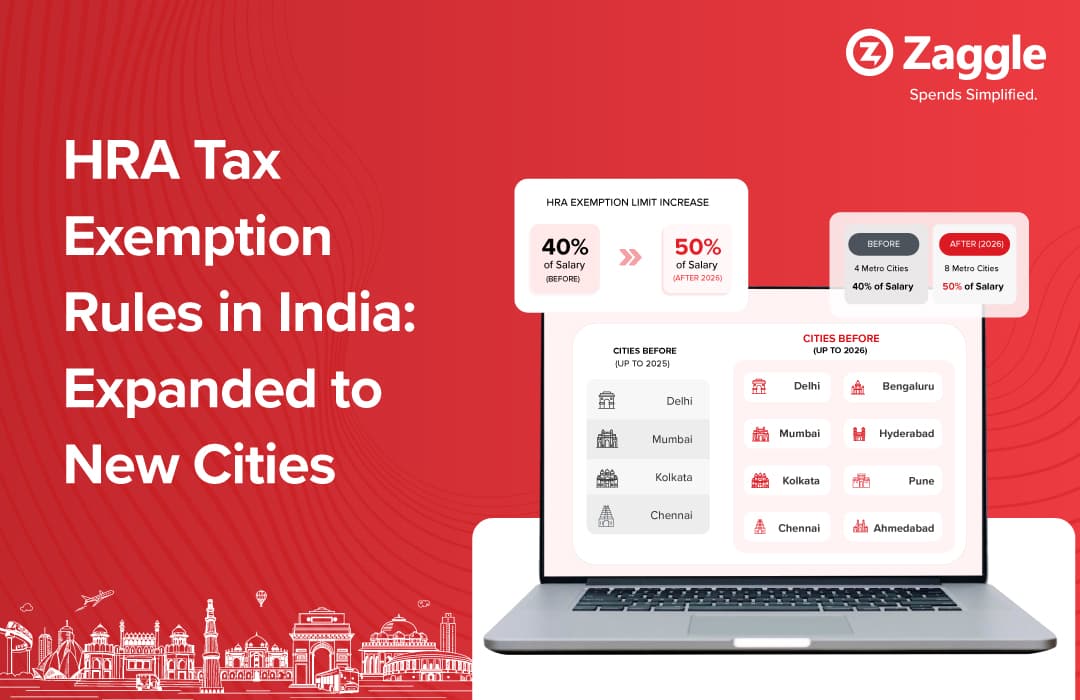
Previously restricted to just 4 major cities, the HRA metro cities in India list has doubled under the finalised rules. This update in the RA tax exemption rules in India boosts take-home pay without altering tax slabs, making rent relief more accessible in India's dynamic growth hubs.
What Has Changed in HRA Metro Expansion
HRA calculation for metro cities hinges on city classification, directly influencing tax savings. Under HRA tax exemption rules in India, metro status means a 50% salary benchmark versus 40% for others. The expansion marks a clear shift to reflect modern economic patterns.
Here is the breakdown:
- Earlier metro cities: Delhi, Mumbai, Kolkata, Chennai
- Newly added metro cities: Bengaluru, Hyderabad, Pune, Ahmedabad
A total of 8 cities now qualify for 50% of salary as HRA for metro classification, up from the earlier list of metro cities, while non-metro cities continue to receive 40%. This revision ensures that HRA tax exemption rules in India are better aligned with actual living costs.
How This Impacts Employees and Employers
Employees in the newly classified HRA metro cities in India can now claim a higher tax exemption under revised rules. HRA exemption is determined by comparing three values and taking the lowest: the actual HRA received, a fixed percentage of salary (50% for metro cities and 40% for non-metros), and rent paid after reducing 10% of salary.
For example, say there is a Bengaluru employee who earns a basic salary of ₹80,000 and receives HRA of ₹35,000 and pays rent of ₹30,000:
- Earlier, the metro classification allowed only 40% of salary (₹32,000) as the upper limit for exemption.
- This reduced the benefit to ₹20,000 per month.
- Under the revised classification, the 50% limit increases the ceiling to ₹40,000.
- Thus, the exemption is now capped by the rent-based calculation instead, allowing a higher eligible exemption of up to ₹25,000 per month.
- This results in greater annual tax savings.
Employers benefit too by refining cost-to-company packages for retention. HR teams can now verify employee locations against the expanded list of HRA metro cities in India, and restructure salaries to ensure employees benefit from larger take-home pay.
Key Compliance Steps to Follow
Organisations need a structured compliance approach to ensure claims hold up during audits and avoid unnecessary tax exposure. Key requirements include:
- Maintaining proper rent receipts for all employees claiming HRA exemption
- Collecting landlord PAN details where annual rent exceeds ₹1 lakh
- Ensuring accurate and consistent salary records across payroll and HR systems
- Verifying calculations under applicable HRA rules before filing claims
Organisations can simplify compliance with Zaggle’s salary structuring solutions. The platform brings HRA calculations, rent declarations, and supporting documents into a single system, reducing manual effort and reducing the risk of errors.
It automatically applies updated HRA metro classifications within payroll logic, ensuring calculations stay compliant without repeated rework. With Zaggle, HR and finance teams can generate audit-ready reports instantly, track employee claims in real time, and maintain complete documentation in one place. This makes salary structuring more accurate, faster to manage, and fully aligned with evolving HRA tax exemption rules.
Frequently Asked Questions
Which cities qualify as HRA metro cities in India after the 2026 expansion?
The complete list includes Delhi, Mumbai, Kolkata, Chennai, plus the newly added Bengaluru, Hyderabad, Pune, and Ahmedabad. These 8 cities now enjoy the higher 50% salary cap for HRA exemptions under HRA tax exemption rules in India.
What is the specific change in HRA calculation for metro cities?
Employees in the 4 new HRA metro cities in India (Bengaluru, Hyderabad, Pune, Ahmedabad) move from a 40% to 50% salary benchmark.
Who benefits most from the HRA metro cities in India expansion?
Rent-paying salaried employees in these tech and business hubs gain the most, especially mid-to-senior professionals under the old regime facing high urban rents. The revision offsets living costs without employers raising base salaries.
What practical steps should employers take for the latest HRA compliance?
Employers should update payroll systems to reflect the revised HRA metro classification. They should also verify employee addresses annually and collect rent receipts and landlord PAN details if applicable. This helps reduce errors and ensures smoother audit compliance. Zaggle’s salary structuring solution can simplify this into one integrated platform, aiding organisations to offer flexi benefits to all employees.
Zaggle Admin
Expert contributor and editor at the Zaggle Knowledge Hub, specializing in corporate spend management, expense compliance, and B2B fintech solutions.
In This Article
You May Also Like

How Employee Device Leasing Works in India: Selection, Payroll and Ownership
Posted on : Oct 14, 2026

What Is an Employee Purchase Program? The Complete 2026 Guide for Indian Employers
Posted on : Oct 7, 2026

Why Payroll-Linked Employee Purchase Programs Drive Higher Adoption.
Posted on : Sep 22, 2026