
New Income Tax Limit Changes in 2026: Rethinking Salary Structures for Tax Efficiency
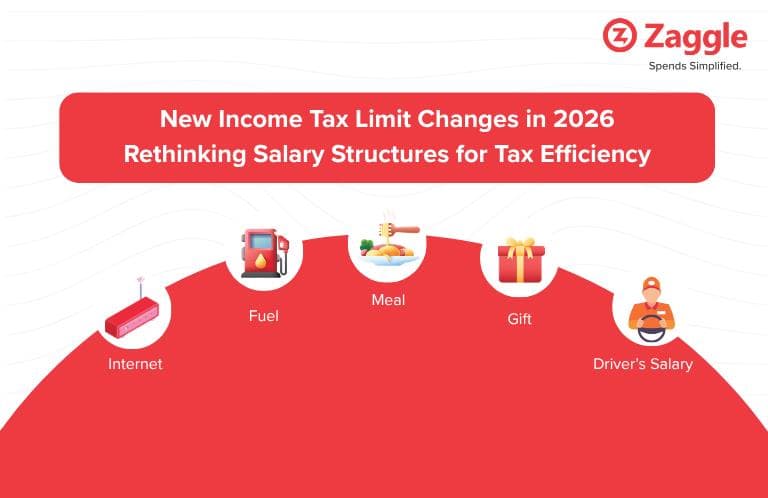
The New Income Tax Rules 2026 introduce significant updates to perquisite valuations and allowance exemptions in India. While tax slabs remain unchanged, these revisions can directly impact salary tax efficiency.
From higher limits on meals and gifts to revised motor car valuation and HRA metro expansion, the changes create new opportunities for optimising salary structures.
For organisations, this is not just a compliance update. It is a moment to rethink how compensation is designed, delivered, and aligned with evolving tax rules. When compensation components are structured carefully, organisations can move closer to the goal of Less Tax, More In-hand for employees while maintaining compliance with evolving tax rules.
With the right mix of tax-efficient perquisites and allowances, organisations can structure up to ₹3,24,000 of an employee’s salary as tax-optimised, now even in the new tax regime. This approach focuses on improving take-home pay through smarter CTC design rather than increasing overall compensation costs.
Across Indian organisations, legacy compensation models are struggling to keep pace with these updates. When perquisite valuations and allowance exemptions are not aligned with regulatory changes, salary structures lose efficiency. The result is higher taxable exposure, compliance risk, and reduced salary tax efficiency.
These developments have prompted wider discussions around new income tax limit changes in 2026 and rethinking salary structures for tax efficiency. Organisations must now review how allowances, perquisites, and housing benefits fit within modern compensation frameworks.
There is both relief and pressure within the new framework. This dual impact highlights an important shift in how organisations should approach compensation planning. Salary structuring now requires a more deliberate and forward-looking strategy.
Organisations that review their frameworks early can strengthen salary tax efficiency and make better use of available exemptions.
Changes Under New Income Tax Rules 2026: Old vs New Comparison
The table below shows the key changes across major categories as per the proposed new rules:
1. Motor Cars
| Category | Old Rule (1962 Rules) | New Rule 2026 | Increase |
| Engine < 1.6L | ₹1,800 per month | ₹5,000 per month | 177% |
| Engine > 1.6L | ₹2,400 per month | ₹7,000 per month | 191% |
| Chauffeur Provided by Employer | ₹900 per month | ₹3,000 per month | 233% |
If proper logbooks and travel records are not maintained, higher taxable value may apply.
2. Education & Hostel Allowance
| Allowance | Old Limit | New Limit |
| Children education allowance | ₹100 per month | ₹3,000 per month |
| Hostel allowance | ₹300 per month | ₹9,000 per month |
For two children, the maximum yearly exemption is now:
(₹3,000 + ₹9,000) × 2 × 12 = ₹2,88,000
Earlier, the maximum was only ₹9,600 per year.
3. HRA Metro Expansion
Earlier, only these cities qualified for 50% salary cap under HRA:
- Delhi
- Mumbai
- Kolkata
- Chennai
Now, these cities are also included:
- Bengaluru
- Hyderabad
- Pune
- Ahmedabad
Employees in these cities can now claim up to 50% of their basic salary instead of 40%, subject to applicable basic salary rules.
4. Residential Accommodation
| City Population | Taxable Value |
| Above 40 lakhs | 10% of salary |
| 15–40 lakhs | 7.5% of salary |
| Below 15 lakhs | 5% of salary |
These rules formalise earlier amendments and do not introduce new rate increases.
5. Other Proposed Changes
| Benefit | Old Limit | New Limit |
| Free meals (per meal) | ₹50 | ₹200 |
| Gifts and vouchers (per year) | ₹5,000 | ₹15,000 |
| Education facility (employer institution) | ₹1,000 per month | ₹3,000 per month |
If the cost of the education facility is more than ₹3,000 per month, the full amount may become taxable.
Challenges in Adapting to New Income Tax Rules 2026
For Indian companies, adapting salary structures under the New Income Tax Rules 2026 goes beyond routine payroll updates. It requires alignment with revised perquisite valuations and allowance exemptions in India across different employee levels.
Businesses often deal with varying benefit entitlements, tax regimes, and operational scales. HR teams must prioritise enterprise-wide tax efficiency to reduce compliance risks.
Without unified visibility into perquisite components and exemption impacts, salary structures can become fragmented. This weakens financial optimisation, increases costs, and exposes companies to further repercussions.
These challenges manifest in several key areas:
- Fragmented Perquisite Visibility
Silos in benefit data across departments hinder accurate valuation of items like motor cars, weakening the ability to leverage relief in areas such as meal thresholds raised from ₹50 to ₹200 per meal. This limits tax efficiency with potential underutilisation of exemptions leading to higher taxable income.
At the revised limit of ₹200 per meal, employees can claim exemptions of up to ₹1,05,600 annually through meal cards, vouchers, or subsidised food, depending on working days and employer policy. Without proper tracking, this becomes a commonly underutilised tax-saving opportunity.
- Inconsistent Exemption Tracking
Monitoring updates like education allowance jumps from ₹100 to ₹3,000 per month per child becomes complex in legacy systems, leading to escalated liabilities upon redesign. Poor tracking can trigger mismatched HRA claims, especially with metro expansion adding cities to the 50% cap, resulting in avoidable tax outflows.
Education and hostel allowance revisions represent one of the most substantial relief measures under the New Income Tax Rules 2026. For two children, the combined maximum annual exemption now increases to ₹2,88,000 compared to the earlier cap of ₹9,600 per annum.
This sharp expansion can significantly enhance tax efficiency for families under the Old Regime and creates meaningful optimisation scope during CTC restructuring.
- Communication and Alignment Gaps
Misalignments between HR policies and employee awareness often lead to confusion over changes like chauffeur valuation increases from ₹900 to ₹3,000 per month. This represents a 233% increase in taxable perquisite value and marks a significant upward revision compared to the earlier framework.
- Risk Exposure from Varying Valuations
Choosing between old and new tax regimes without proper consideration can amplify risks, particularly when logbook compliance for motor cars is overlooked.
Under New Rule 15(3)(c), failure to maintain detailed journey records, mileage logs, destination tracking, and expense documentation can result in presumptive taxation at higher valuation slabs. This can significantly increase taxable perquisites and may expose organisations to audits after implementation.
- Prolonged and Misaligned Restructuring Processes
Balancing perquisite limit changes with cost control can strain internal resources. It often extends restructuring timelines and creates inflexible salary structures. As a result, organisations may fail to fully utilise relief measures such as the tripled gift limit from ₹5,000 to ₹15,000 annually. This is a common challenge for multi-location firms.
Key Strategies to Optimise Perquisite and Allowance Compliance
An effective approach starts with reviewing the components of employee compensation across the organisation. Focus on optimised perquisite valuations and enhanced allowance exemptions. This is where smart tax planning becomes essential, helping organisations align allowances and perquisites with revised limits to improve overall salary tax efficiency.
HR teams must also align salary structures with the HRA metro expansion and other revised relief thresholds. These measures can help improve overall tax efficiency. By centralising assessments and streamlining updates, organisations can convert compliance challenges into opportunities for tax savings.
Central to this are foundational steps like evaluating current CTC against revised motor car slabs. This unifies components for accurate exemption calculations and decreases audit risks.
Comparing the financial impact of the revisions provides better clarity. For example, company car lease structures may see an annual tax loss of approximately ₹11,520 due to higher car valuation. In addition, the increase in driver valuation can further raise taxable value, resulting in an additional annual tax impact of around ₹7,560.
An employee-owned car may offer better tax treatment than a company-leased car, depending on structuring and documentation. Clear role allocation also helps, with HR handling allowance redesign and finance reviewing tax impact.
Each benefit category should be reviewed carefully. For instance, the hostel allowance increase to ₹9,000 per month creates new scope for optimisation.
Residential accommodation must also be assessed based on city slabs, with correct salary calculations to prevent excess tax exposure. Regular reviews and consolidated reporting enable timely adjustments, helping organisations maintain balanced structures and improve tax efficiency.
Smarter Salary Structuring with Zaggle
Adapting to the New Income Tax Rules 2026 requires clear visibility into perquisites, allowances, and HRA metro expansion changes. Without a centralised system, salary restructuring can become complex and prone to errors.
Zaggle’s employee benefits platform can help HR teams manage perquisite limit changes, optimise allowance exemptions, and integrate updates directly into payroll workflows. With structured insights and real-time visibility, organisations can improve tax efficiency while staying compliant.
Zaggle enables businesses to centralise benefit data, streamline implementation, and communicate changes effectively to employees.
Act early to avoid last-minute disruptions and rising tax exposure. Explore Zaggle’s employee benefits platform to simplify compliance and structure salaries with confidence.
Frequently Asked Questions
What are the key perquisite limit changes in the New Income Tax Rules 2026, and why do they matter for salary tax efficiency?
Key changes under the New Income Tax Rules 2026 focus on categories such as motor cars, chauffeurs, meals, gifts, and education facilities. These updates can affect salary tax efficiency by lowering tax in some categories while raising it in others.
What role does documentation play in avoiding motor car valuation risks?
Proper documentation is essential when a company provides a car to employees. Maintaining clear logbooks, travel records, and expense details helps ensure the benefit is valued correctly for tax purposes. Accurate documentation reduces tax risk and supports smooth compliance with the New Income Tax Rules 2026.
Can expert guidance help optimise structures amid perquisite limit changes?
Zaggle’s employee benefits platform can help bring allowances and benefits into one central system, aligned with the new revisions. It can support clearer analysis and smoother integration with payroll. This may help organisations improve tax efficiency, reduce compliance risks, and continue offering structured employee benefits.
What are the key strategies for achieving salary tax efficiency under the New Income Tax Rules 2026?
Successful strategies for achieving salary tax efficiency under the New Income Tax Rules 2026 involve:
- Preparation through perquisite analysis
- Optimising long-term exemptions
- Leveraging data for HRA and allowance alignments
- Timing restructurings before fiscal deadlines
- Incorporating employee feedback
- Focusing on balanced relief and burden areas
Zaggle Admin
Expert contributor and editor at the Zaggle Knowledge Hub, specializing in corporate spend management, expense compliance, and B2B fintech solutions.
In This Article
You May Also Like

How to Build an Employee Purchase Program with Premium Protection and Seamless Experience
Posted on : Sep 15, 2026
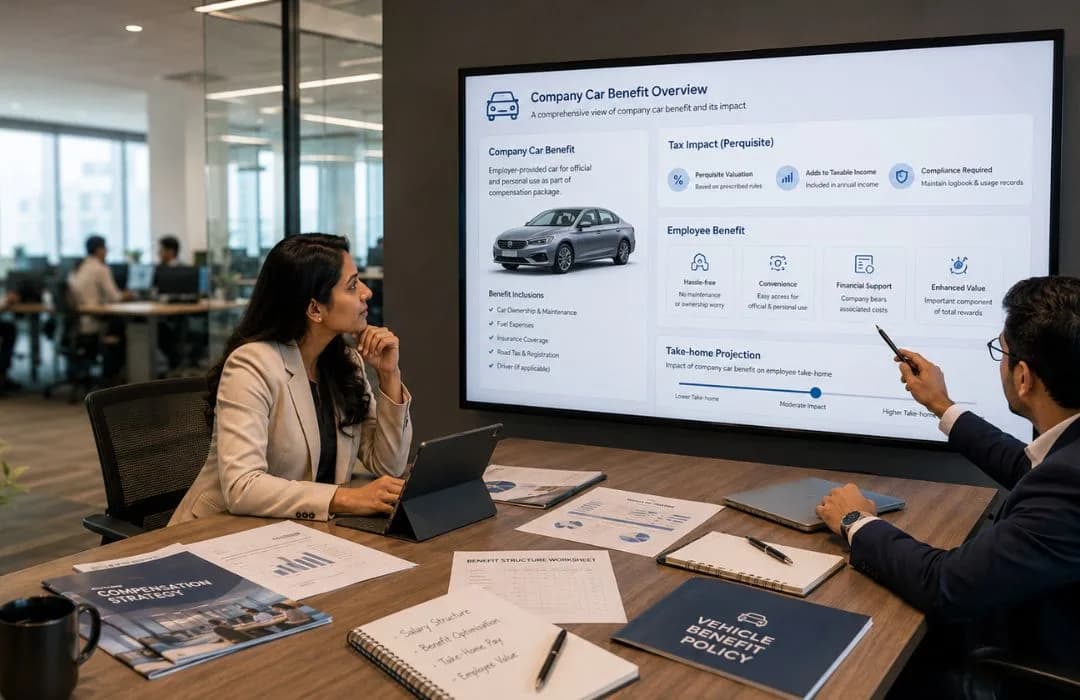
Company Car vs Personal Car: Tax Implications for Employees
Posted on : Aug 5, 2026

Old vs New Perquisite Rules: What Has Changed in the Income Tax Framework
Posted on : Jul 28, 2026