
How Automated Dashboards Improve Decision-Making for Retail CFOs
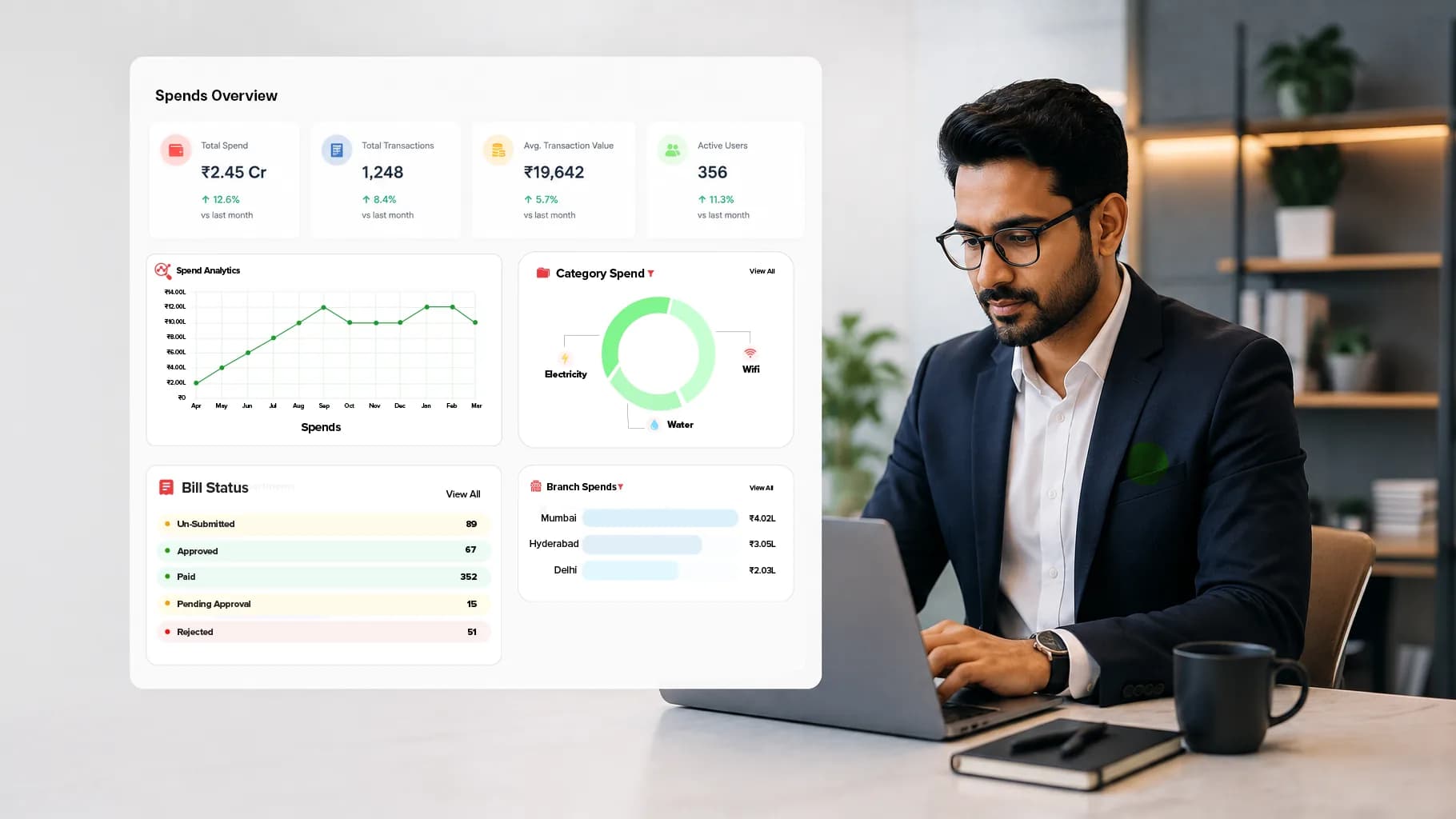
At 8:45 a.m. on a Monday, a retail CFO opens their laptop expecting clarity. Instead, they see spreadsheets from different stores. Different formats. Different timelines. One report highlights higher utilities in one region. Another flags travel expenses that crossed limits last month. A third arrives late, with missing bills. The numbers tell partial stories, but none of them connect.
The board meeting is in two hours. The CFO knows what will be asked. Why did costs spike in certain clusters? Which stores stayed within budget? Are these exceptions or early warning signs?
This is a familiar situation for many retail finance leaders. As store networks expand and operating models diversify, decision-making becomes harder. Data exists, but it arrives late. By the time patterns are visible, the opportunity to intervene has often passed.
This is why automated dashboards are becoming central to modern retail finance. They give CFOs access to real-time dashboards that reflect what is happening across stores and clusters as it unfolds. For retail CFOs, this is not about better reporting. It is about making timely, confident decisions in an environment where delays are costly.
Why Retail CFOs Need Real-Time Financial Visibility
Retail CFOs need up-to-date insights to make timely decisions and prevent small issues from becoming major problems. Here’s how real-time visibility helps:
Addressing the complexity of retail cost structures
Modern retail spans multiple formats, locations, and vendors, with each store having unique cost drivers like rent, utilities, staffing, and logistics. Without real-time visibility, CFOs struggle to distinguish between temporary variances and actual issues that need action.
Overcoming the risk of retroactive decision-making
Relying on month-end or quarterly reports means decisions are based on past data. By the time issues surface, budgets may already be breached. Real-time dashboards help CFOs monitor performance continuously, reducing financial risk, especially during peak periods.
Gaining real-time visibility for better control and accountability
Continuous financial visibility ensures aligned decision-making. Store managers understand limits, cluster leaders can benchmark performance, and CFOs gain clarity to take timely, informed action rather than reacting after the fact.
How Automated Dashboards Improve Financial and Operational Control in Retail
Automated dashboards turn fragmented data into clear, actionable information for finance teams. Here’s how they enhance control and efficiency:
Turning fragmented data into a single reference point
Retail data is often spread across multiple systems, formats, and teams. Automated dashboards consolidate this information into a unified view, reducing reconciliation effort and improving reliability. When finance teams trust the data, they spend less time validating numbers and more time analysing trends and outcomes.
Enabling proactive expense monitoring and spend analytics
Automation enhances finance analytics, expense tracking, and expenditure analysis by uncovering patterns that are difficult to detect manually. Repeated policy breaches, category-level overruns, or unusual spikes thus become early visible. This helps CFOs act before the issues scale, rather than addressing the issue after budgets have already overrun.
Improving operational decision-making without slowing the business
Automation-enabled dashboards also help improve the speed of approvals and the clarity of the escalation process. Financial teams can then address exceptions with understanding, and operations can proceed as scheduled.
Over time, this balance improves operational efficiency and financial discipline simultaneously, rather than treating them as competing priorities.
How Zaggle Enables Smarter Financial Control for Retail CFOs
Zaggle provides a digital spend management solution that combines visibility, governance, and actionable insights for retail CFOs.
Here’s how Zaggle strengthens financial management across stores and clusters:
Building structure through configurations and controls
Zaggle is designed to bring structure to complex retail environments. A central store master setup captures data across all store formats, creating consistency at scale. Clearly defined user roles, including Custodian, Store Manager, Cluster, and Finance, ensure accountability and accuracy at every stage of the expense lifecycle.
The platform enables granular control through spend categories, sub-limits, and store-level budgets that can be configured daily, monthly, quarterly, seasonally, or annually. This flexibility allows CFOs to reflect real operating conditions without compromising governance. Mandatory bill uploads and automated policy checks further strengthen expense control and compliance.
Strengthening governance through approvals and reporting
Zaggle’s custom multi-level approval workflows align with retail hierarchies, enabling faster decisions without weakening oversight. Standard and quarterly consolidated reports support strategic reviews, while visibility into unsubmitted and unapproved bills reduces leakage. These controls ensure that financial governance remains consistent, even as store networks scale.
Driving action through real-time dashboards and analytics
Real-time dashboards on the platform offer constant visibility, from the store level through the cluster level and finally to finance. Finance executives are also able to view spending behaviour and make indicative decisions on spending that requires constant monitoring for potential risks. End-of-day reports ensure that retail analytics and finance are always on the same page.
Conclusion
For retail CFOs, timely insight is critical. Automated dashboards enable faster, more confident decisions by replacing delayed reports with continuous visibility. With real-time dashboards, finance teams can identify risks early, control spendings, and respond to changes across stores and clusters.
By combining structured controls with actionable dashboards, Zaggle helps retail CFOs maintain financial discipline while staying agile. It turns visibility into control, and data into decisive action.
Frequently Asked Questions
Why do retail CFOs need real-time dashboards?
Retail CFOs deal with multiple stores, varying costs, and complex vendor ecosystems. Before small issues escalate, these dashboards offer continuous visibility, enabling them to:
Spot trends
Manage budgets
Make timely decisions
How do automated dashboards improve financial control in retail?
Automated dashboards consolidate fragmented data, making it easier to monitor spend, track exceptions, and analyse trends. This shifts finance teams from reactive reporting to proactive decision-making, improving operational efficiency.
What makes Zaggle suitable for multi-branch retail management?
Zaggle helps retail CFOs manage multiple stores efficiently. Key benefits:
Centralised data: Information about all stores, clusters, and finance in one place
Live dashboards: Instant visibility across locations
Policy enforcement: Automated compliance checks
Streamlined approvals: Faster budget and exception handling
Spend control: Track budgets, sub-limits, and pending bills
Zaggle Admin
Expert contributor and editor at the Zaggle Knowledge Hub, specializing in corporate spend management, expense compliance, and B2B fintech solutions.
In This Article
You May Also Like

Rent, Maintenance and Society Dues: Which Recurring Property Payments Actually Work on UPI?
Posted on : Oct 16, 2026
Business QR Code Payment vs Cash Float: What Should Branch Managers Use?
Posted on : Oct 6, 2026

4 Ways to Prevent Petty Cash Shrinkage Digitally
Posted on : Sep 29, 2026