
How QSR Chains Can Eliminate Cash Leakages with QR-based Payments
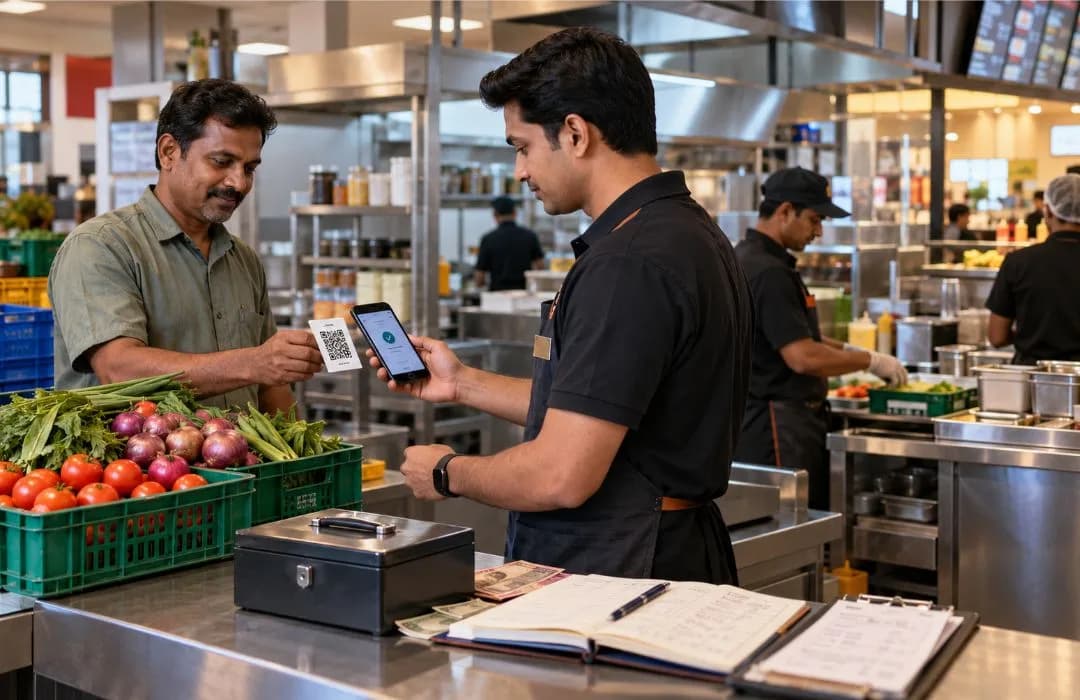
Every other morning, an employee of a Quick Service Restaurant (QSR) went out to purchase fresh tomatoes from a nearby vendor. Tomatoes were often short in their regular grocery delivery, and the restaurant bridged the gap by purchasing from a local grocer.
The payment was made in cash, there was no receipt, and the expense never made it into the books. It seemed trivial – just tomatoes after all. But when this happened often enough, those small, unrecorded expenses quietly became cash leaks.
For Priya, the finance manager, poor petty cash management created constant budgeting issues. Actual costs did not match records, reports were delayed, and accountability was unclear.
By moving to QR-based payments, each purchase became a cashless transaction. It was recorded instantly, ensuring every expense was tracked accurately. Priya gained real-time visibility into spending. Meanwhile, the QSR team could focus on serving customers instead of handling cash.
Why Cash Leakages Are a Persistent Problem in QSR Operations
QSRs handle numerous small daily expenses, and managing these through cash often leads to leakages. Even minor unrecorded spends can add up, affecting budgets and financial reporting. Here are some reasons why QSRs are prone to cash leakages:
Heavy reliance on petty cash
Many QSRs still depend on cash for everyday purchases. This makes petty cash management difficult and prone to errors. Transactions rely on physical receipts and manual recording. During busy shifts, these can easily be missed. As a result, decision-makers often ask: What is the best way to manage petty cash in restaurants?
Increased risk of errors and overspending
Handling cash manually raises the chance of unrecorded transactions. It also makes enforcing spending limits difficult. Small discrepancies may go unnoticed. Over time, they gradually drain funds and create budgeting challenges for QSR operations.
Limited real-time visibility
Cash transactions are usually logged only after they happen. This creates delays and gaps in tracking expenses. Without digital tools or spend tracking software, finance teams do not get timely insights into where money is going.
Achieve Seamless Expense Control and Visibility with QR-based Payments
To manage multi-outlet expenses easily and conveniently, QSRs can opt for solutions such as Zaggle’s (Branch Recurring Operating Monthly Expenses solution). It offers a digital, QR-based platform that connects multiple branches, adding both structure and accountability to petty cash management.
Here is how Zaggle supports QSR finance teams to maintain control and prevent cash leakages:
Centralised expense tracking
As QSR chains grow, consistency across outlets can be hard to maintain. Zaggle provides a single platform for finance teams to monitor all transactions in real time. Every purchase is captured and recorded accurately.
Real-time insights and anomaly detection
Each payment is logged instantly. Finance teams gain clear visibility into category-wise spending. This helps spot discrepancies or unauthorised transactions quickly. It stops cash leakage before it can escalate.
Multi-level approvals and automated workflows
Zaggle applies pre-defined spending policies with automated approval workflows and notifications. This reduces manual effort, improves accountability, and ensures compliance across all stores.
Standardisation and operational efficiency
Centralised dashboards and reports bring all outlet-level expenses onto a single platform. This creates consistency in how spending is tracked and reviewed across outlets. It reduces the need to manually collect receipts or reconcile data. As a result, finance and operations teams can focus on planning and decision-making instead of follow-ups.
A Tried and Tested Solution
As QSR chains grow, managing petty cash becomes more complex. It is harder to keep track of spending consistently across all outlets. Without real-time controls, finance teams depend on manual checks and reports to fill gaps, fixing issues after money has already been spent. Not only does this increase workload and drain resources, but also allows cash leakages to continue.
QR-based payment systems solve this problem by bringing structure and accountability to daily store expenses. With Zaggle’s, QSR chains can standardise payment processes. They can approve spends through defined workflows and track expenses using centralised dashboards and reports. This allows finance and operations teams to spend less time chasing data and more time improving efficiency and profitability.
Leading QSR operators such as Subway and Sapphire Foods, which run large multi-brand networks including KFC, Pizza Hut and Taco Bell in India, use Zaggle’s Branch Recurring Expenses Solution. This helps them gain better control over restaurant-level expenses and improve financial visibility across outlets.
Frequently Asked Questions
What is the best way to manage petty cash in restaurants?
Using digital solutions like Zaggle helps streamline petty cash management. It also ensures that spending stays within set limits.
How do QR payments help QSRs track expenses better?
With this payment mode, every transaction is recorded instantly. This gives QSR finance teams real-time visibility into category-wise spending and makes spotting discrepancies quick and easy. It also reduces cash leakages and builds accountability.
What is digital expense management in QSRs?
It is the process of managing all restaurant-level spends digitally. This helps eliminate manual cash handling and improve accuracy and accountability.
Do QR-based payments reduce administrative work for QSRs?
Yes, they eliminate the need to manually collect receipts, reconcile cash, and follow up on approvals. This saves time for both the QSR and finance teams.
Are QR-based payments suitable for multiple QSR locations?
Yes, they are well suited for QSR chains with multiple locations. They standardise how expenses are paid and recorded across outlets, regardless of size or location. All transactions flow into a central system, giving finance teams consolidated visibility into spending patterns. This makes it easier to enforce policies, monitor budgets, and maintain consistent control across the entire chain.
Zaggle Admin
Expert contributor and editor at the Zaggle Knowledge Hub, specializing in corporate spend management, expense compliance, and B2B fintech solutions.
In This Article
You May Also Like
Rent, Maintenance and Society Dues: Which Recurring Property Payments Actually Work on UPI?
Posted on : Oct 16, 2026
Business QR Code Payment vs Cash Float: What Should Branch Managers Use?
Posted on : Oct 6, 2026

4 Ways to Prevent Petty Cash Shrinkage Digitally
Posted on : Sep 29, 2026