
Old vs New Perquisite Rules: What Has Changed in the Income Tax Framework

During a routine compensation review at a mid-sized technology firm in Bengaluru, the HR team noticed an unexpected increase in taxable benefits for senior employees. Company-provided cars, chauffeur services, and certain allowances were now being valued at significantly higher rates. At the same time, other components such as education allowances and meal benefits had become more favourable from a tax perspective.
The difference was not due to a change in tax slabs. Instead, it reflected recent income tax rule changes for employees that have revised how several perquisites and allowances are valued.
Comparing the old vs new income tax rules in India helps you understand how allowances, housing benefits, and everyday perquisites are valued without changing tax rates. Some benefits now attract higher taxable valuation, particularly executive perks such as employer-provided vehicles.
At the same time, several exemptions have expanded substantially. For organisations, the shift affects salary structuring, payroll compliance, and employee benefits. Reviewing compensation frameworks early helps align with these income tax rule changes for employees.
A key change is that tax-efficient structuring now works even under the new tax regime. Organisations can structure up to ₹3,24,000 of salary as tax-optimised income across both regimes, helping improve take-home pay without increasing overall costs.
Key Income Tax Rule Changes for Employees: Old vs New Comparison
The table below summarises major changes:
Benefit | Old Rule | New Rule |
Company car (<1.6L engine) | ₹1,800/month | ₹5,000/month |
Company car (>1.6L engine) | ₹2,400/month | ₹7,000/month |
Chauffeur facility | ₹900/month | ₹3,000/month |
Children education allowance | ₹100/month | ₹3,000/month |
Hostel allowance | ₹300/month | ₹9,000/month |
Meal Benefit | ₹50 per meal | ₹200 per meal |
Gifts and vouchers | ₹5,000/year | ₹15,000/year |
These perquisite valuation changes significantly revise taxes on employee benefits. Some benefits now attract higher tax, while others offer better exemptions.
Major Perquisite Valuation Changes Affecting Employee Benefits
Understanding the old vs new Income Tax Act 2025 changes in India helps clarify their impact on compensation.
Motor Car Perquisites
One of the most notable updates in the framework relates to employer-provided vehicles. Under the revised rules:
Company cars with engines below 1.6 litres are now valued at ₹5,000 per month instead of ₹1,800
Vehicles above 1.6 litres are valued at ₹7,000 per month instead of ₹2,400
Chauffeur facilities are now valued at ₹3,000 per month, up from ₹900
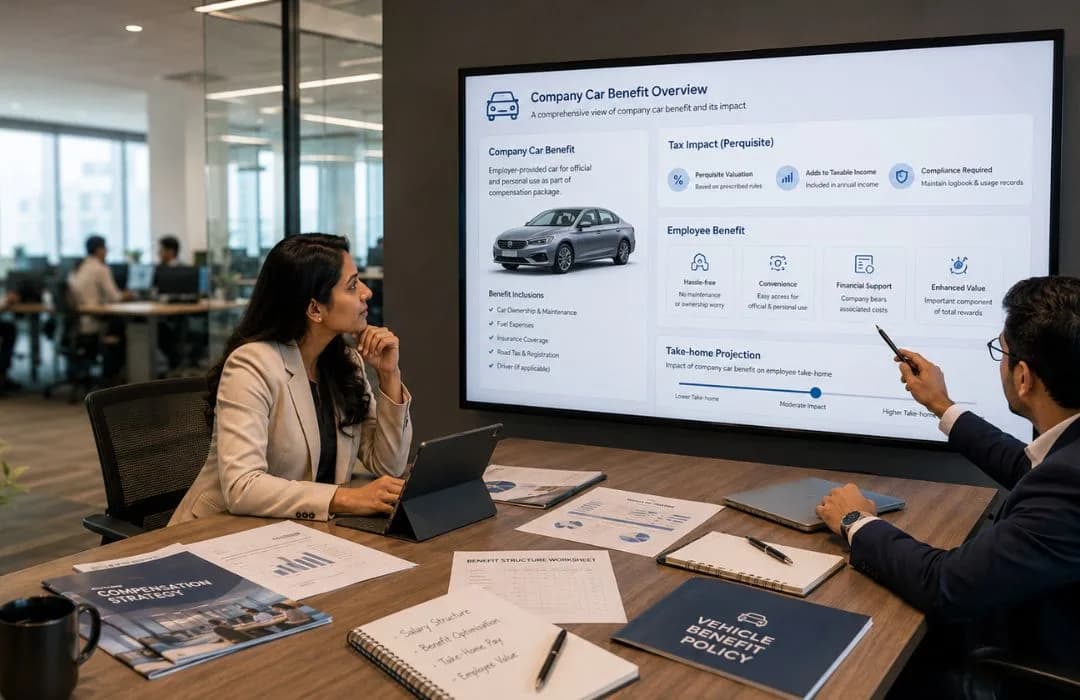
These perquisite valuation changes increase the taxable value of transportation benefits. Organisations offering vehicle benefits may therefore need to reassess car entitlement policies. Maintaining detailed travel records and logbooks becomes critical to ensure correct valuation.
Education and Hostel Allowances
Among the most employee-friendly income tax rule changes for employees are the revised limits for education-related allowances.
Allowance | Old Limit | New Limit |
Children education allowance | ₹100/month | ₹3,000/month |
Hostel allowance | ₹300/month | ₹9,000/month |
For two children, the potential annual exemption becomes:
(₹3,000 + ₹9,000) × 2 × 12 = ₹2,88,000
Earlier, the total exemption was limited to ₹9,600 per year. These revised limits significantly improve the relevance of education allowances within compensation packages.
HRA Metro Expansion
Another important update under the income tax rule changes for employees involves House Rent Allowance eligibility. Earlier, the 50% salary cap for HRA applied only to four cities:
Delhi
Mumbai
Kolkata
Chennai
The revised rules now include:
Bengaluru
Hyderabad
Pune
Ahmedabad
Employees in these cities can now claim HRA exemption up to 50% of basic salary instead of 40%, subject to applicable conditions. This change may influence how organisations structure housing benefits in large technology and service hubs.
Inflation Adjustments for Everyday Benefits
The new perquisite rules in India also adjust limits for commonly used benefits.
Benefit | Old Limit | New Limit |
Meal benefits | ₹50 per meal | ₹200 per meal |
Gift vouchers | ₹5,000/year | ₹15,000/year |
Education facility (employer institution) | ₹1,000/month | ₹3,000/month |
Although individually small, these allowances collectively contribute to improved perquisite valuation changes that support tax-efficient compensation planning. What HR teams need to do is structure benefits such as meal allowances, education reimbursements, and vouchers correctly.
With the per-meal limit increased to ₹200, employees can claim up to ₹1,05,600 in annual tax benefits through meal cards or vouchers, depending on working days and company policy.
This is why many organisations are now exploring how smart tax planning turns employee benefits into bigger take-home pay, particularly when designing compensation frameworks under new rules.
Compliance and Structuring Challenges for Organisations
Adapting to these income tax rule changes for employees requires more than payroll adjustments. Organisations must ensure that salary structures remain compliant while continuing to support tax efficiency.
In many cases, this involves reviewing how allowances and benefits are structured, particularly in light of the new income tax limit changes in 2026 and the growing need to rethink salary structures for tax efficiency. Several challenges commonly arise:
Fragmented Perquisite Visibility
Benefit data is often distributed across multiple systems. Without unified oversight, companies may struggle to track the tax implications of benefits such as company vehicles or housing allowances.
Changing Exemption Limits
Updates to education allowances, meal benefits, and vouchers require recalibration of existing compensation frameworks.
Increased Documentation Requirements
For example, employer-provided vehicles now require detailed travel logs and documentation to ensure accurate perquisite valuation.
Salary Structure Alignment
Companies operating in newly classified metro cities must update HRA calculations and payroll logic to reflect the revised limits.
Failure to align compensation frameworks with the new perquisite valuation changes may increase taxable exposure and audit risks.
Strategies to Manage Perquisite Valuation Changes
Organisations can respond to the old vs new perquisite rules in India by reviewing compensation structures holistically. When allowances, reimbursements, and perquisites are aligned with the latest income tax rule changes for employees, organisations can reduce unnecessary tax exposure while maintaining compensation value.
This approach reflects the broader objective of less tax, more in-hand. Thoughtful salary structuring improves take-home income without increasing employer costs. Some effective strategies include:
Conducting organisation-wide reviews of existing allowances and perquisites
Assessing the tax impact of higher valuation for executive benefits such as company vehicles
Leveraging expanded exemptions for education and hostel allowances
Aligning housing allowances with the expanded metro classification
Implementing systems that track benefit utilisation and compliance requirements
A structured approach can help organisations convert income tax rule changes for employees into opportunities for improved tax efficiency.
Smarter Salary Structuring with Zaggle
Navigating perquisite valuation changes requires clear visibility into employee benefits, allowances, and payroll structures. Zaggle’s employee benefits platform enables organisations to:
Centralise benefit management across departments
Configure allowances in line with the old vs new perquisite rules in India
Track perquisite valuation changes automatically
Integrate benefit data directly with payroll systems
With structured insights and automated compliance checks, HR teams can adapt to evolving income tax rule changes for employees while maintaining efficient salary structures. By simplifying benefit management and improving visibility, organisations can implement updated tax rules with greater confidence.
Frequently Asked Questions
What are the major income tax rule changes for employees regarding perquisites?
The updated rules revise the taxable value of several benefits. Company car valuations and chauffeur benefits have increased, while allowances for education, meals, and gifts now have higher exemption limits.
Why are perquisite valuation changes important for salary structures?
Perquisites form a key part of compensation. When their valuation rules change, the taxable value of salary components may increase or decrease depending on how benefits are structured.
Which benefits have become more tax-efficient under the new rules?
Education allowances, hostel allowances, meal benefits, and gift vouchers now have higher exemption thresholds, which can improve tax efficiency when used within compensation frameworks.
How can organisations adapt to the old vs new perquisite rules in India?
Companies can review existing salary structures, update payroll systems, and monitor benefit utilisation to ensure compliance with the revised perquisite valuation rules.
Zaggle Admin
Expert contributor and editor at the Zaggle Knowledge Hub, specializing in corporate spend management, expense compliance, and B2B fintech solutions.
In This Article
You May Also Like

How to Build an Employee Purchase Program with Premium Protection and Seamless Experience
Posted on : Sep 15, 2026
Company Car vs Personal Car: Tax Implications for Employees
Posted on : Aug 5, 2026

How to Design an Employee Purchase Program With Payroll Deductions and Zero Corporate Liability
Posted on : Jul 24, 2026