
What Is Three-Way Matching & Why Is It Important for AP Accuracy (And Why It Fails)
Key Takeaways
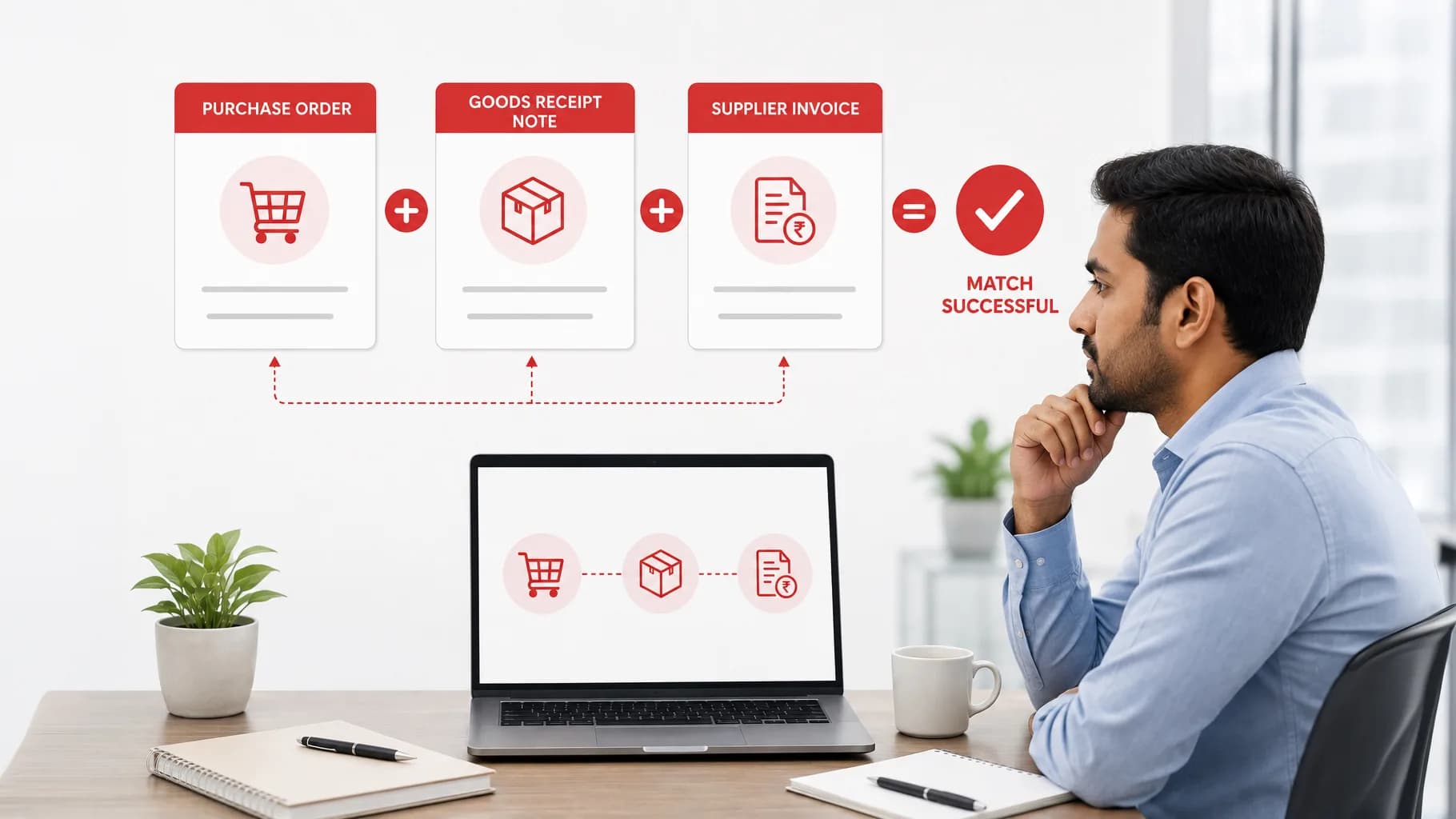
Three-way matching of purchase order (PO), goods receipt note (GRN) and invoice prior to payment helps avoid overpayments, incorrect invoices, paying for goods not received and duplicate payments.
Most of the matching failures are caused by manual processes, inconsistent data and late updating of documents.
Automated three-way matching points out exceptions by matching the PO, GRN and invoice. Finance teams can focus on mismatches instead of having to manually check every invoice.
The most frequent errors are partial deliveries, duplicate invoices, late receiving records and quantity or price differences. These mismatches can delay payments and increase AP workload.
Three-Way Matching in Accounts Payable: Benefits, Challenges, and Best Practices
Quick Answer
A three-way match is an Accounts Payable (AP) control that involves matching the purchase order (PO), goods receipt note (GRN) and supplier invoice prior to payment approval. It checks the ordered received and invoiced items. This helps organisations to pay only for goods or services that have been ordered, received and invoiced correctly, thereby minimising payment errors and improving financial controls.
AP teams often have difficulty matching purchase orders, goods receipt notes and supplier invoices, as the data is held in different systems or updated at different times. Such differences can result in delay of payment and increase in manual work. The invoice itself isn’t always the problem. Each payment is backed by procurement data that is synchronized and accurate.
But it is not just the processing time that is the problem. When PO, GRN and invoice data is missing, incomplete or inconsistent, finance teams have to take additional time to reconcile records and fix exceptions. A Deloitte case study found that manual invoice processing could take as long as 30 minutes per invoice, with much of this time spent on finding missing procurement information before the invoice can be approved for payment.
What Is Three-Way Matching?
Three-way matching is the process of matching these three procurement documents with each other before the invoice is approved for payment:
Purchase Order (PO): What was ordered and at what agreed terms
Goods Receipt Note (GRN): What was actually received, including any quantity differences
Supplier Invoice: What the supplier is billing for, including quantities, prices and taxes
How Does the Three-Way Matching Process Work?
The procedure generally involves four steps:
1. PO Creation
A PO is a description of the supplier, the items or services, the quantities, the prices and the agreed terms. The PO is the baseline of what was approved and ordered. Then the invoice and receipt are compared against that.
2. The Goods/Services Are Received
The warehouse or receiving team records the actual receipts, using a GRN or any other type of receiving record.
3. The Supplier Sends in An Invoice
The invoice is the price the supplier is charging. Now AP verifies the quantities and prices and other details match the PO and the actual goods received and then approves payment.
4. Finance Compares the Three Records.
If the details are within the tolerance levels set by the organisation, the invoice can be approved and paid. If the difference is not cleared, it is flagged for review.
Example
A retailer purchases 100 office chairs at ₹5,000 per chair. Once the shipment arrives, the warehouse only registers 95 chairs in the GRN. However, the supplier sends an invoice to the retailer for 100 chairs.
If three-way matching is not done, then the invoice could be approved only based on the purchase order, and hence there would be an overpayment. Three-way matching identifies the mismatch between the PO, GRN and invoice right away. This helps the finance team confirm the reason for the mismatch before the payment is released.
Other mismatches are also subject to the same rule. The PO says 100 units at the rate of ₹5,000 each, but the supplier bills for 100 units at the rate of ₹5,500. This variance is flagged before payment.
Why Use Three-Way Matching in Accounts Payable
Three-way matching provides AP teams with a stronger verification process prior to invoice payment. It can eliminate overpayments, duplicate payments, supplier disputes and unauthorised purchases. It also minimises the manual work involved in invoice validation and offers a more transparent audit trail.
The advantage becomes more and more significant as invoice volumes increase. Manual matching means teams have to look through their procurement records and investigate exceptions themselves.
The higher the invoice volumes, the more difficult it is to maintain these controls manually. One Deloitte case study found that manual invoice processing could take up to 30 minutes per invoice. Automation using AI reduced the time it took to process by 50–75%, suggesting the potential of automation to improve the efficiency of these controls. This allows AP teams to spend more time fixing actual exceptions and less time validating routine invoices.
The following table shows the business impact of failed matching.
Failed Matching Scenario | Business Impact |
PO, GRN and invoice don’t match | Invoice exception and payment delay |
Quantity or price mismatch | Overpayment risk and supplier disputes |
Duplicate invoice is processed | Duplicate payment risk and additional AP work |
GRN is missing or delayed | Invoice remains pending and requires manual follow-up |
Matching requires manual investigation | Higher AP workload and slower processing |
Limited visibility into exceptions | Harder to track pending invoices and payment status |
Why Three-Way Matching Often Fails
Usually the process fails because PO, GRN and invoice information is created, updated and stored across disparate systems and teams. Even a well-designed control can create false exceptions if procurement, receiving and accounts payable are operating separately. This makes it difficult to implement on a large scale a control that is simple in theory.
Delayed Goods Receipt Updates
In three-way matching, time is as important as accuracy. In many enterprises, finance teams receive invoices before the warehouse confirms delivery. The invoice is then marked as a mismatch. Not because the supplier made a mistake, but because the GRN has not yet been recorded. The number of invoices increases, which can lead to backlogs in approvals and delays in paying suppliers.
Inconsistent Procurement Data
Most of the mismatches happen prior to receipt of the invoice. For example, the PO may have one price or item description while the invoice has another. This creates a mismatch that finance teams then have to investigate manually.
Partial Deliveries Are Treated as Exceptions
Partial deliveries are quite common, especially in the case of large or staggered orders. A partial delivery itself is not a failure. The issue arises when the system or process cannot properly account for partial or staggered receipts. This can cause legitimate invoices to be flagged for manual review.
Disconnected Approval Workflows
Even when the PO, GRN and invoice match correctly, the invoice can still get stuck in the approval process. Many organisations still rely on manual reminders or emails to keep invoices moving through the approval process. A delay by any one approver can result in invoices being stuck for days. That ends up adversely affecting vendor relationships and payment cycles.
Duplicate Invoices
The system may generate duplicate invoices due to manual re-entry or re-submission. Duplicate detection is an important supporting AP control alongside three-way matching. Without automated checks, AP teams may need to refer to previous records to see if an invoice has already been processed. This increases the chance of duplicate payments and increases the workload.
Incorrect Invoice Details
Incorrect invoice numbers, supplier information, quantities, prices or taxes can also create exceptions. While these errors may be minor in nature, they can stop an otherwise valid invoice from moving through the payment process.
How Finance Automation Makes Three-Way Matching More Reliable
The most common misconception of three-way matching is that it is an accounts payable process. It is, in fact, a data consistency process. The match only works when procurement, receiving and finance are working from the same information. One document that is wrong or late can stop the entire workflow.
Finance automation addresses this problem not only by automating isolated tasks, but by connecting the entire Procure to pay workflow. The procurement lifecycle connects purchase requests, purchase orders, goods receipts and invoices. That means automation connects/synchronises the relevant PO, receipt and invoice data so matching can happen more reliably.
Instead of manually reviewing each invoice, finance teams can focus on real exceptions, such as price discrepancies, quantity variances or unauthorised purchases. By automating routine invoices, AP teams can free up time to focus on resolving issues that require human judgment.
The Role of OCR and AI/ML
OCR captures key invoice information such as quantities, prices, tax data and invoice numbers, removing the need for manual data entry. The invoice is then matched against the PO and GRN data using the matching rules. AI/ML can help identify anomalies and handle exceptions.
ERP Integration
ERP integration ties the data for procurement, receiving, AP and accounting. This allows the matching process to use the existing PO and GRN information rather than teams manually transferring data between systems. Integration also reduces manual re-entry and data movement between procurement, receiving and AP.
Automated Exception Handling
Automation can help differentiate between routine invoices and those that need human intervention. Any exceptions, missing information and unusual transactions are sent to the appropriate team for review. Invoices that meet pre-defined guidelines can be processed automatically.
Accurate Three-Way Matching: Best Practices
Three-way matching is only as reliable as the procurement data behind it. A late GRN or incomplete PO can prevent even a sophisticated AP system from validating an invoice.
First, ensure that each purchase has an approved purchase order. PO compliance is important for automated matching. Off-contract or ad hoc purchasing often produces invoices that cannot be auto-matched. GRNs should also be recorded when delivery is verified. Delayed GRNs can leave invoices stuck in the approval queue.
Standardising the invoicing requirements of suppliers is equally important. All invoices from the suppliers must include the PO number, item description, quantity, price and tax details. It accelerates the processing of invoices and reduces the number of unnecessary exceptions.
Finally, treat periodic mismatches as a pattern, not as random occurrences.
When the same suppliers, departments, locations or categories are creating exceptions on a regular basis, find the root procurement issue and fix it, instead of fixing the same discrepancy each month.
When Should Businesses Automate Three-Way Matching?
Businesses with high volumes of invoices, frequent exceptions or growing AP workloads should consider automation. It can also be of benefit if teams depend on manual follow-ups, payments are slow or procurement, receiving and finance systems are disconnected. These are signs that manually managing matching is becoming increasingly difficult, and automation can be an invaluable tool for teams to process invoices more efficiently.
The point is not to automate every transaction without thought. It is designed to speed the processing of routine invoices through established controls while routing real exceptions to the right people who are best able to deal with them.
Conclusion
Three-way matching works best as part of an integrated procurement and AP process. Consistency in data between invoices, goods receipts and purchase orders allows teams to quickly validate payments. Then, exception-based workflows can route mismatches for review instead of teams manually checking each invoice.
Procure-to-Pay solutions from Zaggle automate compliance checks, invoice validation, approval workflows and three-way matching. This can help enterprises reduce invoice validation and approvals time by more than 60%.
SHRM East, Subway and Can Fin Homes are among the organisations that have adopted Zaggle's solutions to enhance visibility, automate manual processes and streamline finance operations. Schedule a demo today and learn how Zaggle can help your organisation build a more efficient, accurate and well managed accounts payable process.
Frequently Asked Questions
What is three-way matching in accounts payable?
Three-way matching compares the PO, GRN and supplier invoice before payment is approved.
Why is three-way matching important?
It increases the accuracy of accounts payable by reducing the risk of duplicate payments, invoicing errors, pricing discrepancies and payments for goods not received.
What documents are required for three-way matching?
Three-way matching requires aligning the following three documents:
Purchase Order (PO)
Goods Receipt Note (GRN)
Supplier Invoice
What is the difference between two-way matching and three-way matching?
Two-way matching compares the purchase order and invoice, while three-way matching compares the PO, invoice and goods receipt or receiving record.
What happens if a three-way match fails?
The invoice is usually put on hold or routed as an exception until the discrepancy has been investigated. The issue can be invoicing errors, missing goods receipts, wrong pricing or quantity variances.
Can three-way matching be automated?
Yes. Today’s Procure-to-Pay solutions automate document matching, surface exceptions and route mismatches to the right approvers. This speeds up the processing of invoices and cuts down on manual work.
What are the most common causes of three-way matching failures?
The most common reasons are inconsistent data, disconnected systems for procurement, delays in updating goods receipts, manual data entry errors, partial deliveries, wrong POs and duplicate invoices.
How does three-way matching improve accounts payable accuracy?
It helps ensure the PO and the actual delivery are in line with the invoice details. This means better audit readiness and less risk of invoice disputes, overpayments and fraud. In addition, it decreases the manual review burden and provides a controlled validation step prior to payment.
Zaggle Admin
Expert contributor and editor at the Zaggle Knowledge Hub, specializing in corporate spend management, expense compliance, and B2B fintech solutions.
In This Article
You May Also Like
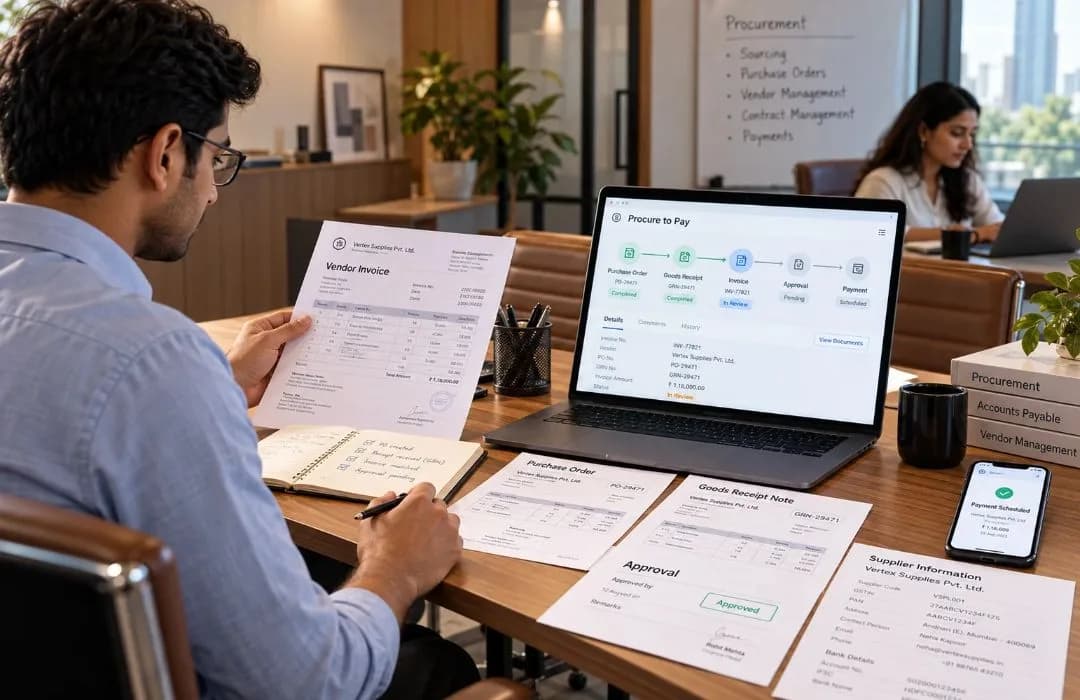
8 Approaches That Accelerate and Secure Vendor Payments Efficiently
Posted on : Oct 12, 2026
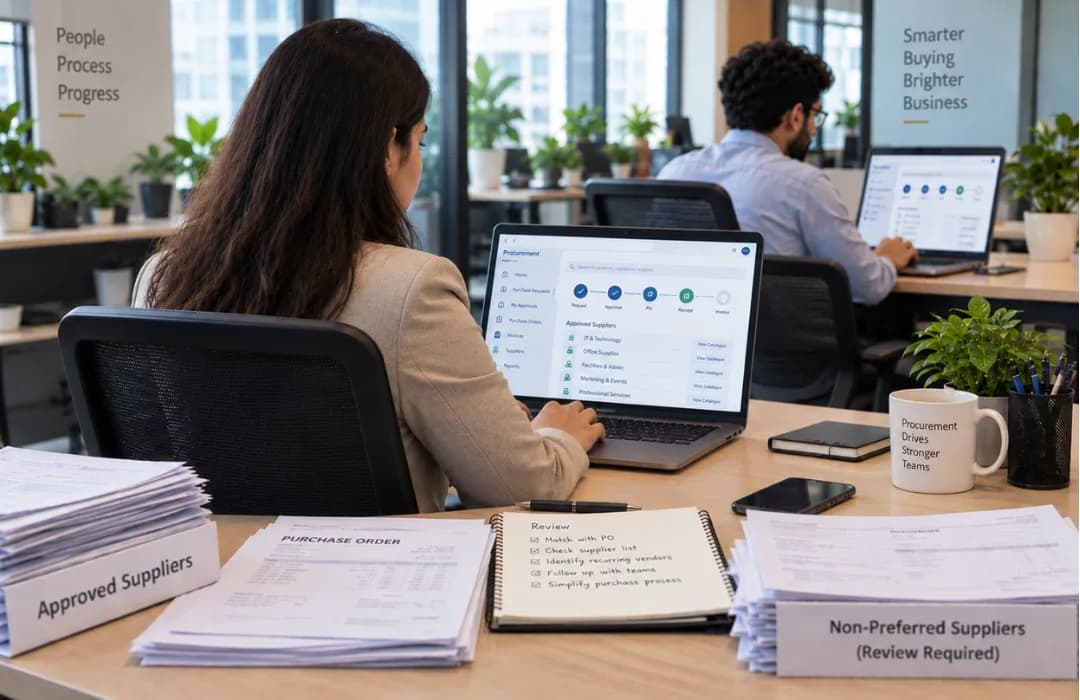
What Is Maverick Spending and How Can Procurement Teams Eliminate It?
Posted on : Sep 18, 2026
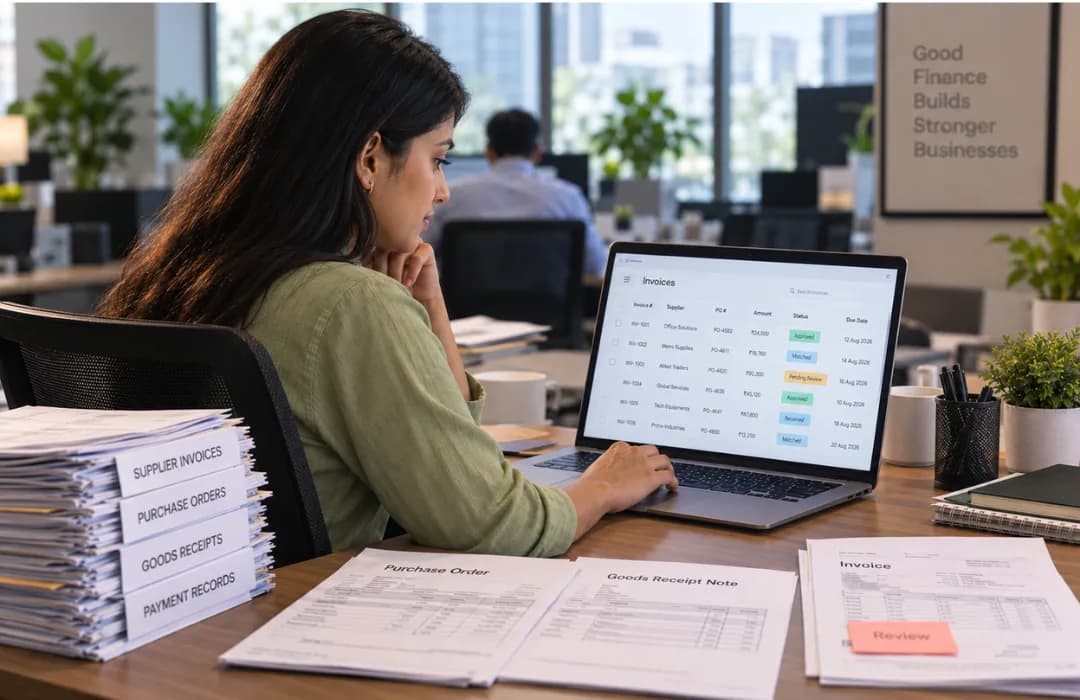
How Invoice Automation Saves Finance Teams Hours Every Week
Posted on : Sep 11, 2026