
Why Invoice Matching Breaks Down and How Machine Learning Fixes It
Summary
Invoice matching remains one of the most significant slowdowns in the procure-to-pay cycle. This article explains how Machine Learning and OCR improve accuracy, reduce manual work, and strengthen financial control for Indian enterprises managing complex procurement workflows.
Why Invoice Matching Still Burdens Finance Teams
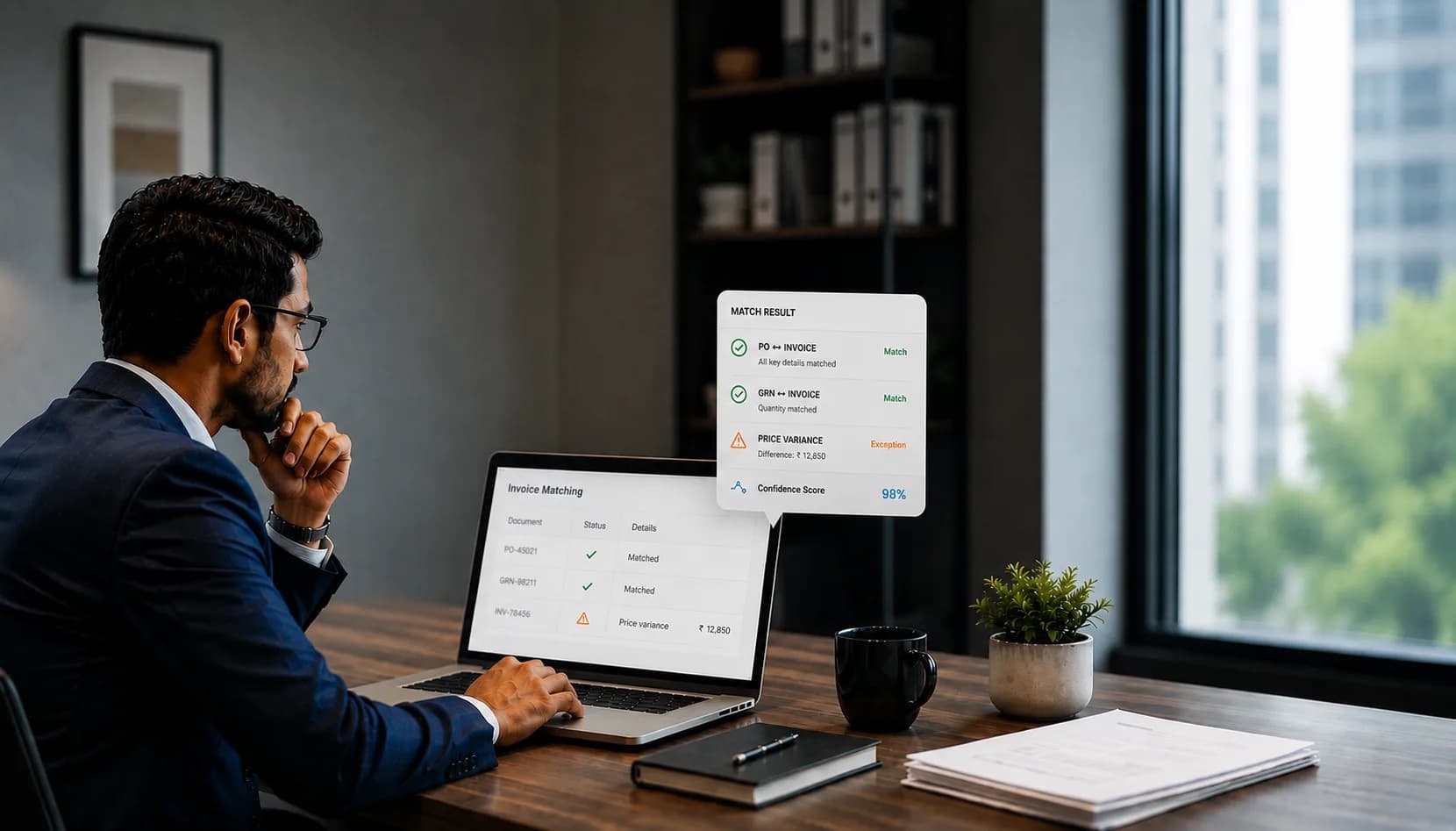
Even as Indian enterprises adopt digital procurement tools, invoice matching remains a slow, error-prone step in the procurement cycle. A large share of Indian businesses still rely on manual document handling and fragmented invoicing practices, which create a persistent reconciliation challenge. Manual comparisons between invoices, purchase orders, and goods received notes often lead to delays, mismatches, and repetitive back-and-forth communication with vendors.
During month-end cycles, finance teams spend hours clarifying quantity differences, correcting tax codes, and verifying line items captured incorrectly. A procurement manager at a multisite retail company in Bengaluru recently shared that her team manually checked more than 800 line items each week because of inconsistent invoice formats. These inefficiencies contribute to slower approvals, delayed vendor payments, and unnecessary strain on working capital.
Machine Learning (ML) and Optical Character Recognition (OCR) offer practical, scalable solutions for managing these complexities. By digitizing unstructured invoices and interpreting patterns in historical data, ML and OCR help finance teams remove repetitive work and improve accuracy across the procure-to-pay workflow.
Why Invoice Matching Often Breaks Down
Invoice verification sounds simple in theory, but it is one of the most unpredictable stages in the procure-to-pay process. Formats differ across vendors, tax components change, handwritten notes appear on scanned copies, and goods-received notes may not match the invoice timing. A World Bank report on enterprise systems in developing markets found that inconsistencies in manual procurement documentation are one of the top causes of payment delays and error-prone accounting. When teams rely on email attachments or PDF uploads, the risk of manual entry errors, duplications, and version mismatches increases significantly.
These challenges become more pronounced in organizations with geographically dispersed operations. Approvers may only see partial information, leading to slow decision cycles. Lack of visibility not only affects vendor relationships but also impacts the accuracy of financial closing.
How Machine Learning and OCR Transform Invoice Processing
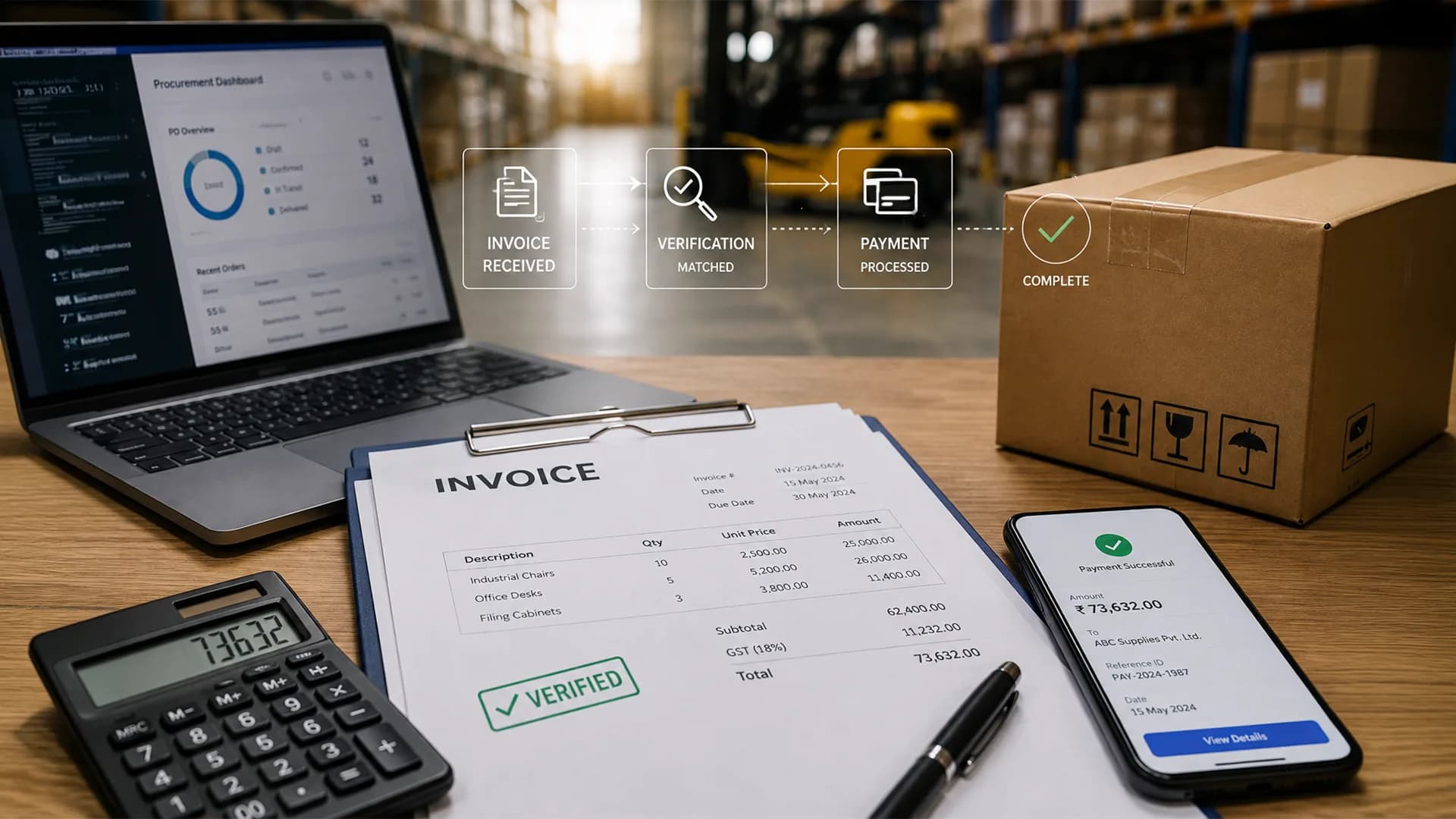
Machine Learning models excel at learning patterns from historical data. They can identify deviations in line items, flag amounts that fall outside expected ranges, or detect anomalies that may require review. OCR technology extracts data from scanned invoices or PDFs and converts it into structured, machine-readable information. The combination of ML and OCR delivers three core benefits for finance teams. First, invoice capture becomes more consistent because OCR eliminates manual data entry. Second, ML-driven anomaly detection highlights mismatches early, reducing the number of invoices that reach the approver with errors. Third, automated validations ensure that incorrect tax amounts or item codes are flagged before they cause downstream issues.
Improving Control and Accuracy Across the Procurement Cycle
When ML and OCR operate within an integrated procure-to-pay system, the accuracy of invoice matching improves considerably. For example, an Indian logistics company working with hundreds of transport vendors could experience invoice variations because of fuel adjustments, route differences, or service delays. OCR captures the variation, while ML highlights deviations from expected ranges based on historical vendor performance.
Automated document capture improves transparency and reduces processing inconsistencies in high-volume environments. While the context differs, the underlying principle remains relevant for enterprise procurement. The real advantage lies in embedding ML and OCR into standardized approval workflows. This ensures that validations occur instantly, that exceptions are categorized correctly, and that every document follows a traceable path.
Cut effort in invoice checks.
Explore smarter matching methods.
Drive efficiency now
Workflow Automation Brings Consistency to Matching.
ML and OCR deliver high accuracy when supported by workflow automation. Automated routing ensures that invoices move through the correct hierarchy, tolerance checks validate acceptable variations, and duplicate detection prevents multiple postings. Digital workflow adoption significantly improves accountability and reduces processing delays in administrative systems. Consistency improves when workflows are digitized.
Exceptions Require a Dedicated Strategy.
Exceptions are inevitable. Price changes, partial deliveries, contract adjustments, and bulk order discounts can all cause temporary mismatches. The question is whether teams identify these issues early or only notice them during reconciliation.
ML helps categorize exceptions based on historical frequency, vendor behavior, and matching patterns. Over time, these insights help companies improve purchase order practices, vendor management, and contract alignment. Finance leaders can use exception patterns to identify systemic issues such as delayed GRN updates or incorrect PO creation.
Remove friction from exception reviews.
See how automation helps.
Streamline now
How Integrated P2P Platforms Elevate Matching Accuracy
Indian enterprises increasingly prefer unified platforms that manage requisitions, purchase orders, vendor invoices, and payments within a single environment. Solutions such as Zaggle’s Procure-to-Pay support this shift by combining ML- and OCR-driven invoice processing with structured workflows that reduce manual intervention.
Features such as configurable approval matrices, centralized audit trails, and analytics-driven visibility align with the needs of finance leaders seeking predictable, transparent procurement operations. When organizations adopt P2P automation with integrated matching, they create a more controlled procurement cycle that supports better cash flow planning and vendor trust.
The future of invoice matching and approvals
The trend toward automation in financial operations is accelerating. Automation and AI adoption across finance and administrative functions will continue to increase significantly by the end of the decade, as organizations seek higher accuracy and speed. For enterprises handling large vendor ecosystems, the ability to process invoices with minimal manual checks will become a baseline expectation.
Moving Toward Faster, Cleaner, and Smarter Approvals
Invoice matching does not need to slow down procurement or payment cycles. When Machine Learning, OCR, and workflow automation work together inside a unified procure-to-pay system, organizations achieve greater accuracy, faster approvals, and stronger financial control. Indian enterprises that invest in these capabilities today build a more resilient and transparent procurement cycle for the future.
Zaggle Admin
Expert contributor and editor at the Zaggle Knowledge Hub, specializing in corporate spend management, expense compliance, and B2B fintech solutions.
In This Article
You May Also Like

Why Procurement Approvals Take So Long (And How Workflow Automation Fixes It)
Posted on : Aug 21, 2026
What is Procurement? The Ultimate Guide for Modern Enterprises
Posted on : Aug 14, 2026

5 Best Practices to Cut Accounts Payable Processing Time
Posted on : Jul 22, 2026