Why Payroll-Linked Employee Purchase Programs Drive Higher Adoption.
Summary
Payroll-linked Employee Purchase Programs reduce friction, improve affordability, and build trust in employee benefits. By integrating payroll deductions with zero upfront cost, organizations achieve higher adoption while maintaining governance, financial discipline, and employee engagement.
The Adoption Problem Most Employee Benefits Never Solve
Improving Employee Purchase Program adoption is often harder than launching the program itself. According to Gartner, only 45% of employees strongly agree that their organization cares about their overall wellbeing. When benefits are difficult to access or use, even well-intentioned programs struggle to create the impact organizations expect.
Across India's medium and large enterprises, employee benefits portfolios have expanded steadily. Yet adoption remains inconsistent. Employees hesitate when programs involve upfront payments, manual reimbursements, or complex processes. The result is a gap between benefit availability and actual participation.
In many organizations, benefits do not fall short because they lack value. They fall short because they do not fit naturally into how employees manage their monthly finances.
How Payroll Deductions Drive Employee Purchase Program Adoption
Payroll deductions work because they fit naturally into how employees manage their finances. Instead of arranging upfront funds or relying on credit cards, employees can spread costs across predictable monthly deductions, making participation feel more accessible.
Consumer finance research supports this behavior. A ResearchGate study on installment-based payment models found that offering purchases through installments increased purchase incidence by approximately 9 percentage points. The findings suggest that people are more likely to participate when costs are distributed into manageable payments rather than paid upfront.
For organizations, payroll integration adds governance. Deductions are standardized, auditable, and policy-driven, reducing administrative effort while creating a consistent employee experience.
This payroll-led predictability also directly affects how employees perceive financial well-being at work. When benefits are structured around stable income flows rather than discretionary spending, they tend to be trusted and used more consistently, a dynamic explored in “How smart tax planning turns employee benefits into higher take-home pay.”
Bridging the Device Access Gap with Employee Purchase Programs
Smartphones and personal devices are no longer discretionary. They have become an integral part of how employees communicate, collaborate, and stay productive. In fact, research shows that 87% of companies have workplace policies that expect employees to use personal devices in professional settings.
Yet many employees delay upgrading their devices due to competing financial priorities. This creates a subtle productivity gap. Organizations increasingly depend on mobile-first work environments, while employees may be relying on aging devices that affect performance, security, and user experience.
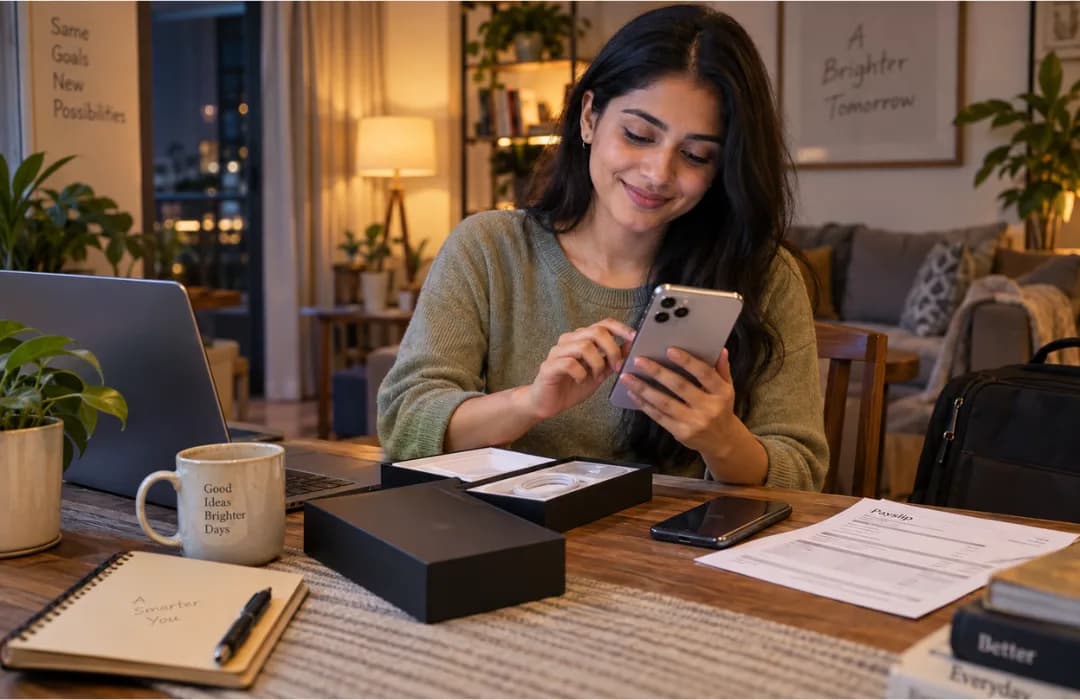
An Employee Benefit Purchase Program structured around payroll deductions helps bridge this gap without converting personal devices into corporate assets. Employees retain ownership and choice, while organizations make access to modern technology more affordable and accessible.
As a result, many organizations are beginning to view device-led benefits as part of a broader employee well-being and financial wellness strategy. Benefits that remove access barriers tend to see stronger participation and long-term engagement.
Make Device Purchase More Affordable
Book a Demo Now
Why Zero Upfront Cost Drives Higher Adoption in Employee Purchase Programs
Zero upfront cost is one of the strongest drivers of adoption in an Employee Purchase Program. When employees can access premium devices without an initial payment, the benefit feels inclusive rather than selective. Research on installment-based payments found that participation increased by approximately 9% points when costs were spread over time rather than paid upfront.
This is especially important in organizations with diverse income profiles. A payroll-linked structure ensures that benefits are not restricted to employees with higher disposable income. It also avoids the discomfort sometimes associated with employer loans or salary advances. The program feels like a benefit, not financial assistance.
From a finance leadership perspective, zero corporate cost ensures that employee engagement initiatives do not compete with working capital priorities. Benefits that deliver value without balance sheet impact are easier to approve, sustain, and scale.
How Device Choice and Partnerships Influence Employee Purchase Program Adoption
Adoption is not driven solely by financing. Device choice, brand trust, and fulfillment experience significantly influence participation. Programs that offer access to widely preferred devices such as Google Pixel, iPhone, and Samsung models create immediate relevance. Structured partnerships with authorized distributors, such as Redington or Ingram Micro, ensure pricing transparency, warranty coverage, and consistent after-sales support.
Employees are more likely to participate when the experience mirrors trusted consumer journeys and is backed by enterprise-grade governance. This focus on choice reflects a broader trend in employee benefits strategy, where flexibility and autonomy directly impact morale and engagement, as discussed in “How flexible benefit plans that strengthen employee morale.”
The Administrative Impact of Higher Adoption
Higher adoption simplifies operations across HR and finance. When most employees follow a standardized payroll-linked process, HR teams spend less time managing exceptions. Finance teams gain predictable visibility into deductions without manual reconciliation. Compliance becomes easier to enforce.
Benefits programs with low friction and high clarity sustain engagement longer than complex offerings. For organizations facing benefits fatigue, adoption becomes a practical measure of program effectiveness.
Common Reasons Employee Purchase Programs Fail to Drive Adoption
Despite strong intent, many Employee Purchase Programs underperform due to fragmented execution. Limited device options, unclear communication, or disconnected vendor experiences erode trust. Others focus heavily on discounts while overlooking usability. Employees value predictability and transparency as much as cost savings.
Addressing these gaps requires viewing Employee Purchase Programs as part of a broader employee benefits ecosystem. Many organizations start by examining how benefits can improve take-home pay without increasing employer costs, a challenge addressed in “How flexi benefits boost take-home pay without increasing costs.”
Benchmarking Employee Purchase Programs in India
Leading enterprises now benchmark Employee Purchase Programs against explicit criteria. These include zero corporate liability, seamless payroll deduction, enterprise-grade security, and hassle-free implementation. Savings of up to 48% are essential, but predictability, compliance, and employee experience increasingly define success.
This is why Employee Purchase Programs like Zaggle's are often cited as operational benchmarks rather than promotional examples. They reflect how payroll-led employee benefits can scale responsibly across diverse organizations.
Evaluate benefit adoption
Understand payroll-led design
Drive efficiency now
Designing for Adoption, Not Announcements
Higher adoption is rarely achieved through louder launches. It is driven by quieter design choices that respect how employees earn, spend, and plan their finances.
A corporate Employee Purchase Program with payroll deductions aligns employee convenience with organizational governance. It improves access without increasing cost. It builds trust without operational burden. As employee perks and benefits evolve, payroll-based purchase programs are increasingly viewed as foundational infrastructure rather than optional add-ons.
For leaders rethinking benefits strategy, the real question is not whether such programs work, but whether existing benefits are designed for adoption. Organizations that remove financial friction through payroll-linked models are often the ones that achieve stronger Employee Purchase Program adoption and sustained employee engagement over time.
Review your benefits strategy.
Identify participation barriers
Optimize benefits now
FAQs
What drives adoption of Employee Purchase Programs in India?
Adoption is typically driven by affordability, zero upfront cost, payroll-linked payments, access to premium devices, and a simple enrollment process. Programs that minimize financial and administrative friction generally see stronger participation.
Why do most employee benefits programs see low adoption?
Many benefits programs suffer from low adoption because they are difficult to access, poorly communicated, or require employees to spend money upfront. Complexity often reduces participation, even when the benefit itself is valuable.
How do payroll deductions improve employee benefit adoption?
Payroll deductions make benefits more affordable by spreading costs across predictable monthly payments. This reduces the financial burden of a one-time purchase and simplifies the employee experience.
What adoption rates can enterprises expect from Employee Purchase Programs?
Adoption rates vary based on workforce demographics, communication, device options, and program design. Programs that offer payroll deductions and zero upfront cost generally achieve higher participation than benefits requiring large upfront payments.
How long does it take to see meaningful adoption after launch?
Most organizations begin seeing participation within the first few weeks of launch. Adoption typically builds over the first few months as awareness increases and employees become familiar with the program.
Zaggle Admin
Expert contributor and editor at the Zaggle Knowledge Hub, specializing in corporate spend management, expense compliance, and B2B fintech solutions.
In This Article
You May Also Like

How to Build an Employee Purchase Program with Premium Protection and Seamless Experience
Posted on : Sep 15, 2026
Company Car vs Personal Car: Tax Implications for Employees
Posted on : Aug 5, 2026

Old vs New Perquisite Rules: What Has Changed in the Income Tax Framework
Posted on : Jul 28, 2026