
From Purchase Orders to Payments: 7 Reasons Companies are Automating Procure to Pay
Summary
In 2026, finance and procurement leaders automate the procure-to-pay process to cut costs, improve compliance, and boost visibility, replacing manual bottlenecks with timely control across purchase orders, invoices, and payments.
The Costly Chaos Behind Every Purchase Order
A single purchase request can trigger a chain of emails, spreadsheet versions, and handoffs. Invoices arrive without matching POs. GRNs are delayed. Month-end reconciliation drags. A regional distributor in Pune that sells through channel partners might touch the same invoice five times before payment. These frictions add up as real cost and absolute risk. The shift in 2026 is clear. Leaders want real-time visibility, fewer touches, and dependable controls from request to payment.
1) Manual processing inflates invoice cost and cycle time
Industry benchmarks indicate that the average cost to process an invoice is approximately $5 to $20, and the average cycle time is around 10 days. That is the baseline many teams still live with. Automation and touchless processing are the path to compress both the cost and the delay.
2) Cash visibility drives better working capital
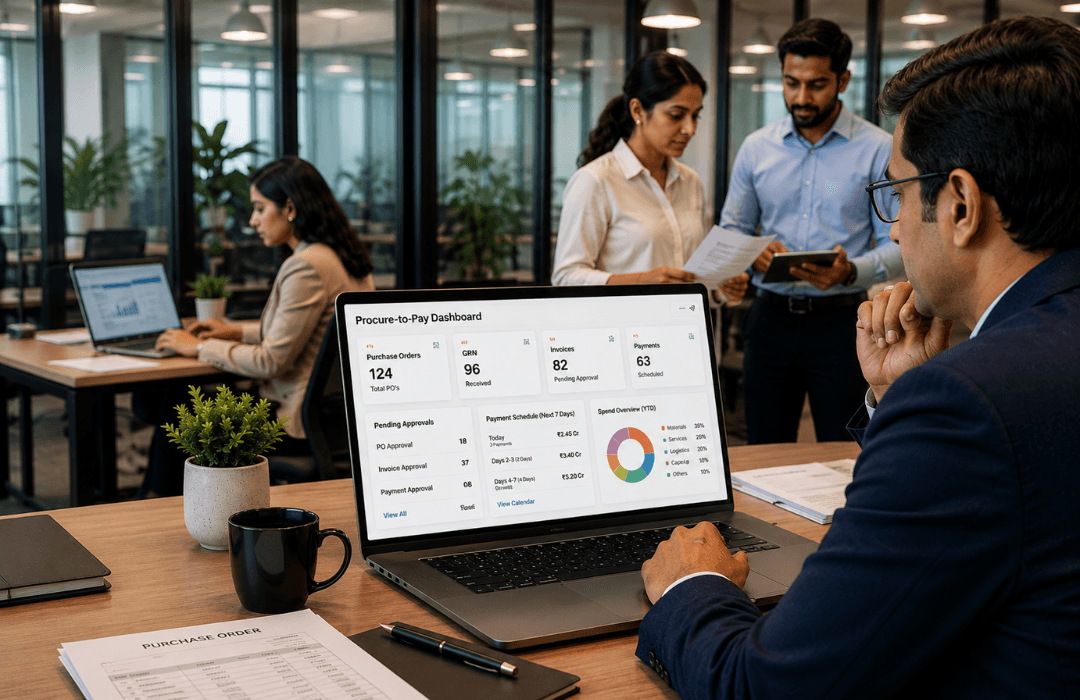
CFOs require real-time visibility into commitments, liabilities, and approvals. Automated procure to pay solutions surface pending POs, in-flight invoices, and payment calendars so treasury can shape terms and timing with confidence. World-class finance organizations that lean into automation run materially leaner and translate that visibility into lower cost to serve.
3) Compliance and audit readiness by design
India’s e-invoicing regime now covers businesses with a turnover of 5 crore and above. That raises the bar on invoice accuracy, data integrity, and audit trails. Automated workflows help standardize checks, map IRN data, and retain verifiable logs across PO, GRN, invoice, and payment.
4) Fraud and leakage reduction
Indian executives identify procurement fraud as a top risk. Automated checks, such as duplicate invoice detection, vendor master controls, and role-based approvals, reduce leakage and make reviews traceable. The signal is stronger when the system flags anomalies early rather than during audits.
Want to gain control of your procure-to-pay processes?
Automate with Zaggle to control P2PGain Control Now
5) Multi-branch consistency without losing speed
Enterprises that sell through channel partners or operate distributed branches often face inconsistent pricing, duplicate purchases, and opaque approval processes. Central policies can coexist with local agility when the procure-to-pay process is integrated into a single system. This includes standard catalogs, tiered approvals, and shared vendor data, as well as location-level budgets and thresholds.
6) Accounts Payable Automation connects to embedded finance
When AP automation is integrated into the procure-to-pay process, payment runs, reconciliation, and cash management become part of the same workflow. Payments initiated inside the platform reduce file transfers and reduce exceptions. Real-time updates improve liquidity forecasts and accelerate the month-end close.
7) Leaders earn higher ROI from digital procurement
Digital world-class procurement teams operate faster, leaner, and at significantly lower costs, thanks to automation and intelligence-driven models. Research in 2026 highlights about 19 percent lower cost and more substantial returns for top performers who scaled digital practices. The direction of travel is clear for 2026 roadmaps.
Looking to connect AP and payments inside one workflow?
Book a Demo Now
How Automation Solutions Help Without Heavy Change Management
The case for automation is operational and financial. Teams need configurable approvals, a single place to raise and track POs, a straightforward way to capture GRNs, a reliable three-way match, and integrated payments. That is the core of modern P2P solutions.
In this context, solutions like Zaggle focus on the procure-to-pay process with embedded finance to drive efficiency and control. Zaggle lets teams set approval workflows, generate POs, update with GRN, upload and approve invoices, and make payments in one place. The goal is straightforward. Reduce manual touches and surface the right exceptions to the correct approvers at the right time.
Want a tailored walkthrough for your current procure-to-pay process?
Share a few details and get a configuration preview.
Start My P2P Assessment
Conclusion
Procure-to-pay automation is not only about speed. It is about trust in numbers, cleaner audits, and better vendor relationships. In 2026, the finance office that treats the procure-to-pay process as a value driver achieves sharper working capital control and fewer surprises. The teams that begin with one or two high-friction steps and expand from there see early wins and build momentum.
Zaggle Admin
Expert contributor and editor at the Zaggle Knowledge Hub, specializing in corporate spend management, expense compliance, and B2B fintech solutions.
In This Article
You May Also Like
8 Approaches That Accelerate and Secure Vendor Payments Efficiently
Posted on : Oct 12, 2026
What Is Maverick Spending and How Can Procurement Teams Eliminate It?
Posted on : Sep 18, 2026

How Invoice Automation Saves Finance Teams Hours Every Week
Posted on : Sep 11, 2026