
How Real-Time Dashboards Prevent Budget Overruns for Quick Commerce Firms
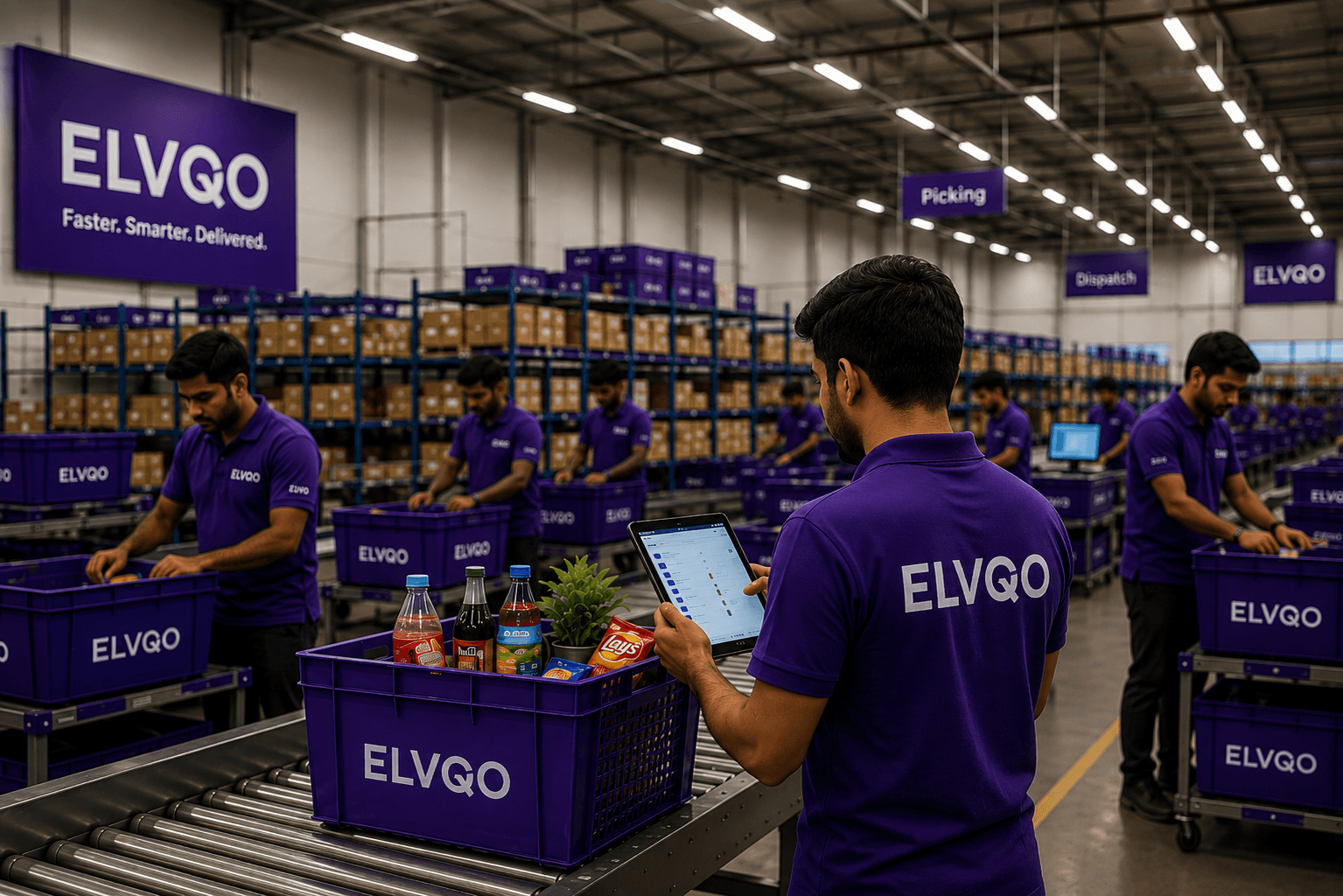
Real-time dashboards play a crucial role in the financial agility of quick commerce firms. By providing instant visibility into spending patterns, they enable managers to prevent overruns, optimise resources, and sustain rapid growth in a hyper-competitive market.
Consider a scenario where the operations team of a mid-sized quick commerce operator reviews daily expense reports. The data shows frequent budget overruns across dark stores. This applies to categories like packaging materials, last-mile logistics, and inventory replenishment.
Unmonitored demand surges during promotions or weather-driven spikes often contribute to these budget overruns. This becomes especially critical when operational margins tighten amid scaling to new cities.
Without access to consolidated real-time spend data, budget monitoring relies on delayed reports. This leads to reactive adjustments that fail to capture the firm's full spending dynamics and overall financial control.
This challenge is widespread in quick commerce, where spend data is often fragmented across dark stores, product categories, and regions. All this limits visibility for proactive decision-making.
Even as India’s quick commerce market grew to $7.1 billion by fiscal year 2025, firms continue to face operational complexities, including volatile demand fluctuations and high-speed supply chain demands.
Without aggregated insights into real-time spend, category trends, and store performance, quick commerce firms miss opportunities for:
Early anomaly detection
Budget reallocations
Cost optimisations
Consistent compliance enforcements
Real-time dashboards address this by enabling firms to monitor and analyse spend data dynamically. This involves continuous spend tracking, expense categorisation, early risk identification, and benchmarking against operational targets to strengthen financial oversight.
Solutions like Zaggle empower quick commerce teams to achieve this, turning potential budget pitfalls into streamlined efficiency and sustained profitability.
Why Budget Overruns Are a Common Challenge in Quick Commerce Operations
Quick commerce firms operate in a high-velocity environment where ultra-fast deliveries and unpredictable demand across dark stores strain budgets. As operations scale to meet tight delivery promises, even small spending variances can quickly turn into budget overruns, eroding thin margins.
Here are some key reasons why budget overruns remain a persistent issue in quick commerce operations:
Rapid Scaling and Volatile Demand Patterns
Quick commerce thrives on speed, but this comes with unpredictable spikes in orders driven by promotions, weather events, or viral trends. Firms often expand dark-store networks aggressively to capture market share, leading to unplanned expenditures on inventory, logistics, and staffing.
Without tight controls, these variables result in overspending that outpaces revenue growth, straining cash flows in an industry where profitability is still emerging.
Fragmented Visibility Across Locations and Categories
With dark stores spread across urban and emerging markets, spend data is often siloed by location, category (e.g., groceries, packaging, utilities), and suppliers. This fragmentation makes it challenging to track cumulative expenses in real time, allowing discrepancies to accumulate unnoticed.
For instance, overstocking perishable items in one cluster or unchecked fuel costs in delivery fleets can push budgets over limits before finance teams intervene.
Reliance on Manual or Delayed Tracking Methods
Many quick commerce operators still depend on periodic reports or manual reconciliations, which introduce delays and human errors. In a sector where decisions must be made instantly, these lags prevent early detection of overruns, turning small inefficiencies into larger financial leaks.
This is compounded by the need for constant replenishment, where delayed insights lead to reactive rather than proactive budget management.
Impact on Profitability in a Low-Margin Industry
Quick commerce operates on razor-thin margins, with high operational costs for warehousing, last-mile delivery, and technology. Unchecked overruns can amplify losses, hinder scalability, and reduce investor confidence.
As the sector continues to grow, maintaining financial discipline is essential to convert rapid expansion into sustainable profits.
How Zaggle Helps Prevent Budget Overruns in Quick Commerce
Real-time dashboards are transforming budget management in quick commerce by giving instant access to spending data. They help managers shift from fixing problems after they happen to preventing them proactively in a fast-changing industry.
Finance teams can detect issues early, ensure policies are followed, and make informed decisions, such as reallocating resources from overspent areas, improving visibility and cutting overspending risks.
Automated features add control by aligning spending with set limits and displaying category budgets at the point of payment. This empowers store managers to make decisions without going over.
Zaggle’s multi-branch expense solution uses real-time dashboards to show spending from individual stores to cluster heads and central finance teams, giving a complete view of spend patterns and budget use.
It sends automated alerts, reminders, and notifications about pending tasks. Standard and quarterly reports also offer big-picture oversight, while special reports flag unsubmitted or unapproved bills to ensure accountability.
Detailed audit trails supported by internal analytics enable faster and more accurate reviews. Budgets can be set at the store level as daily, monthly, quarterly, seasonal, or annual to match dark-store needs, like seasonal inventory spikes.
Spend categories have sub-limits to avoid overspending. Ad-hoc requests allow flexible exceptions with controls, and bulk allocations across stores (as a custom feature) simplify growth.
Pre-defined roles enforce responsibility and approvals. Mandatory bill uploads come with automatic policy checks, and QR-based payments are limited to approved budgets—all building better financial control and proactive changes in quick commerce.
Elevating Spend Management in Quick Commerce
As quick commerce firms scale across cities and dark-store networks, budget management becomes more complex. It is harder to track spending consistently across dark stores. Without real-time controls, finance teams rely on manual checks and reports to spot issues, fixing overruns after money has already been lost.
Not only does this add workload and drain resources, but it also lets budget leaks persist. Automated spend management systems solve this by adding structure and accountability to daily operations.
With Zaggle, quick commerce operators can standardise expense processes. They can approve budgets through set workflows and track spends via centralised dashboards and reports. This lets finance and operations teams spend less time hunting for data and more time boosting efficiency.
How Leading Quick Commerce Brands Use Zaggle
Leading quick commerce players like Blinkit use Zaggle to strengthen spend governance, reduce manual tracking, and improve financial control across expanding dark-store networks.
One feature of this digital platform that Blinkit leverages is to automate electricity bill payments nationwide. The solution is integrated with Bharat Connect to enable auto-fetching of bills, along with real-time visibility, bulk approvals, and easier reconciliation. This reduces payment delays and penalties, while ensuring uninterrupted store operations across its network.
The system also reduces manual workload, with improvements, such as saving 208+ hours per month for Blinkit across 1,200+ sites through digitised tracking and approvals.
Frequently Asked Questions
What are real-time dashboards, and how do they help prevent budget overruns in quick commerce?
Real-time dashboards bring live data together in one place, giving teams a clear view of how money is being spent across operations. For quick commerce firms, this means tracking expenses against budgets as they happen rather than after the fact. When costs start to rise in areas such as inventory or logistics, teams can spot the issue early and make adjustments before small problems turn into budget overruns.
How does store-level visibility improve financial control for dark-store networks?
Store-level visibility gives teams a clear view of inventory, operations, and expenses at each dark store. This helps reduce waste, catch issues early, and maintain better cost control as quick commerce networks scale. Zaggle’s petty cash management solution offers multi-store visibility in each aspect of spending with automated dashboards.
What role do automated alerts play in proactive budget adjustments?
Automated alerts let teams know when spending is getting close to, or crosses, set limits. This gives managers a chance to step in early—reallocating funds or cutting costs before issues grow. With real-time insights, budget oversight becomes ongoing rather than reactive.
Can real-time dashboards reduce operational risks in quick commerce?
Yes, real-time dashboards help reduce operational risk in quick commerce by giving teams a live view of what is happening on the ground. They make it easier to spot issues early, such as inventory mismatches or supply disruptions, so teams can respond quickly. Built-in alerts highlight anomalies as they arise, helping improve accuracy, control costs, and keep fulfilment operations running smoothly.
How does Zaggle support better spend management across multiple quick commerce locations?
Zaggle is a spend management solution provider that automates petty cash, utility bills, and rentals with real-time visibility and compliance for multi-site operations. In quick commerce, Zaggle's solutions help centralise expense tracking to prevent leakages, integrate payments, reduce manual work, and cut costs through digitisation and custom dashboards.
Zaggle Admin
Expert contributor and editor at the Zaggle Knowledge Hub, specializing in corporate spend management, expense compliance, and B2B fintech solutions.
In This Article
You May Also Like

How Role-Based Access Control Secures Petty Cash in Multi-Centre Clinics
Posted on : Jul 7, 2026

How a QR-based System Reduces Reconciliation Efforts for Retail Firms
Posted on : Jun 24, 2026
QSRs Are Reducing Processing Costs with Bulk Budget Allocations: Here's How
Posted on : Jun 19, 2026