
Paying Utility Bills Across 40 Locations: Where UPI Fits and Where It Doesn't
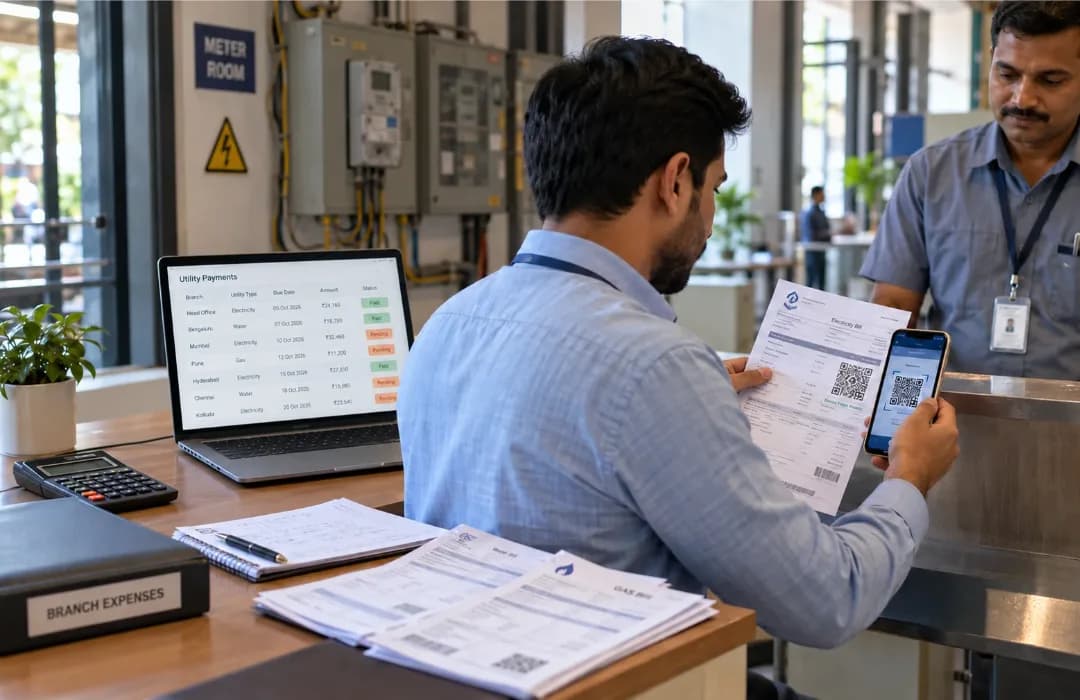
Utility payments seem simple when you have one office and a few monthly bills. Across 40 locations, however, recurring utility payments can become a significant operational burden for Finance. Utilities such as electricity, water, gas, internet and telephone services can be from different service providers, have different billing cycles and different payment modes.
UPI can simplify the payment itself, but for finance teams, the larger challenge is managing the recurring process around each payment. They need to keep track of what is due, where the bill belongs, who approved it and whether it has been paid and reconciled. A survey conducted by PwC states that finance spends almost 30%[1] of its hours only on doing this manually.
Why Utility Payments Become Difficult Across Many Locations
Consider a company that has 40 locations, with each site having electricity and water bills, along with broadband, telecom or gas expenses. The payment is only one step. Finance also needs to manage the information around it.
Fragmented Bill Discovery
Different utility providers will have different portals and billing processes. Bills can also be sent to different people at different locations. One department might send an electricity bill to Finance. The other might pay it directly. A third might keep the bill in a local email inbox until someone comes looking for it.
These small differences in process at 40 locations create a fragmented billing environment. For Finance, this makes it difficult to establish which bills are pending, which location they belong to and who is responsible for payment.
Different Due Dates
Utility bills aren't always due on the same date. Finance may need to watch dozens of payment dates across many providers. Then, a missed approval can turn into a missed payment. Procedures for manual utility bill payments can increase the risk of late payments, penalties and service interruptions.
Limited Centralised Visibility
You may know that one branch has paid its electric bill. But that doesn’t mean you have the same visibility across all locations. A centralised view allows Finance to understand the overall outstanding position across locations without checking multiple portals, emails or branch trackers.
Reconciliation Across Different Channels
Utilities can be paid via UPI, net banking, corporate payment method or an employee’s personal account. Every payment still needs to be mapped back to the correct biller, bill, location or cost centre and accounting record. Manual processes can also cause duplicate payments, missing invoices and misallocations.
Personal UPI Creates a Reimbursement Step
Personal UPI can solve an instant payment problem when a branch has to pay a bill. But it pushes the administrative burden downstream. The employee must submit the claim and Finance must verify the bill, confirm the payment and account for it. The payout might be quick. The reimbursement and reconciliation process can still take longer.
Where UPI Fits in Utility Bill Payments
UPI can be a convenient payment option if the utility company accepts it and the payment aligns with the organisation's workflow. UPI is a good solution for a business with 40 or more locations when:
The bill has been identified and verified already
The provider accepts UPI and charges a fee for it
The payment is made through the proper approval procedure
The transaction can be associated with the appropriate branch or cost centre
Finance can track the completed payment
This is where using UPI for business payments can come in handy. It can be used as a payment rail in a controlled process, instead of being considered as the solution for utility management. It provides a convenient method for eligible payments to be made by authorised teams without the need for cash or personal payment accounts.
A business QR code payment can serve a similar purpose when the biller provides a QR-based payment option. The QR code is used to facilitate the payment but does not control the utility bill workflow around the payment.
It generates a digital transaction record and eliminates some of the friction in the payment process. However, the QR code remains just a payment interface.
Where UPI Stops Solving the Problem
UPI facilitates the payment, but it does not address bill discovery, due dates, approvals, payment tracking and reconciliation. Take the same business. Even when every utility bill can be paid through UPI, Finance still has to find the bills, check the amounts, track due dates, route approvals and confirm that the right bills have been paid.
UPI moves the money. It does not manage the utility expense. The larger problem appears when you have:
Bill discovery: Electricity, water, gas, broadband and telecom providers may follow different processes and use different billing channels
Location mapping: Every bill needs to be linked to the correct branch, office or site
Verification and approval: Bills may need to be checked and approved before payment, with due dates tracked alongside them
Payment: The organisation may use UPI, net banking or a corporate payment method depending on the bill and its process
Reconciliation: Payments need to match the relevant bill, location or cost centre and accounting record
Exception handling: Duplicate, unpaid or unusual transactions need to be identified
For 40 or more locations, these tasks can create more work than the payment itself.
What a Centralised Utility Payment Workflow Should Include
The answer is not to replace UPI. It is to place UPI and other payment methods within a controlled, centralised utility-payment workflow. Here’s how this should ideally be built:
Centralised Bill Visibility
Finance should be able to see pending, upcoming and completed utility payments across all locations from one place. This reduces dependence on separate utility portals, spreadsheets and branch-level trackers.
Automated Bill Collection
Manually collecting bills from multiple locations and different provider portals creates unnecessary work. A centralised system can capture bill information such as the provider, amount, due date and tax details in digital form. This reduces the need for Finance or branch teams to manually collect bills from different sources.
Location and Cost-Centre Mapping
Every utility bill should be associated with the right branch, department or cost centre. This helps Finance understand where utility costs are being incurred and makes allocation more consistent.
Approval Workflows
For bills payment, bills can be sent to the branch manager or Finance stakeholder for review and approval. This establishes a specific control point and a more transparent process of who is approving the bill.
Multiple Payment Methods
A 40-location business doesn't have to pay for all utilities with the same payment method. Where applicable, a centralised workflow can facilitate UPI, net banking and corporate payment methods. The payment method may change without affecting the centralised workflow.
Due-Date Reminders and Payment Status
Automated reminders can flag upcoming due dates and pending approvals. Finance can also track outstanding and paid bills from a centralised view without depending on branch-level follow-ups or manual trackers.
How Zaggle Helps Businesses Manage Utility Payments
Zaggle's Business Recurring Expenses Solution, powered by Bharat Connect, offers businesses a smart way to manage utility payments. It helps centralise utility bill management across branches and locations. It pulls utility bills from a number of providers into one place, helping finance track bills, due dates and payment status.
It's not just about making another payment. Companies can use UPI, net banking or corporate payment methods, where applicable, while keeping utility expenses within a more organised workflow. It also provides teams with automated reminders and approval workflows so Finance can process recurring payments across locations.
Real Impact: How Blinkit Automated Utility Payments Across 1,248 Sites
With a larger network, the advantages of centralisation are even more apparent. Blinkit used Zaggle to automate the electricity bill payment process for 1,248 branches. The solution is connected with Bharat Connect for automated bill fetch, bulk approvals, consolidated payments, real-time visibility and easier reconciliation.
This implementation saved Blinkit 208+ hours each month. The company saved ₹16 lakh by optimising early payment discounts and avoiding penalties. Bills were paid timely or ahead of time, which avoided disruption in the stores.
For a business managing 40 locations, the scale may be smaller, but the problem is the same. Having the process centralised makes it easier to manage the overall utility operations.
Frequently Asked Questions
Can companies pay utility bills through UPI?
Yes. UPI can be used by businesses where the utility provider supports it, subject to the organisation's internal controls and approval process.
Is UPI enough to manage utility payments across 40 locations?
No. UPI can simplify the payment. But a 40-location setup needs bill collection, due-date tracking, approvals, location mapping and reconciliation.
What is a business QR code payment?
A business QR code payment is a way for an authorised user to pay a merchant or service provider by scanning a QR code. It is a payment mechanism, not a substitute for centralised bill management.
How can personal UPI create problems for finance?
Personal UPI payments are made outside the regular payment process of the organisation. Finance then has to manage reimbursement, verify the bill and reconcile the expense separately.
How can companies cut down on missed utility payments?
By centralising bill information, tracking due dates and using automated reminders, companies can reduce the risk of missed payments by giving Finance central visibility into upcoming due dates, pending approvals and payment status. Approval workflows can also help to prevent payment delays.
Zaggle Admin
Expert contributor and editor at the Zaggle Knowledge Hub, specializing in corporate spend management, expense compliance, and B2B fintech solutions.
In This Article
You May Also Like

How QSR Chains Can Eliminate Cash Leakages with QR-based Payments
Posted on : Oct 26, 2026
Rent, Maintenance and Society Dues: Which Recurring Property Payments Actually Work on UPI?
Posted on : Oct 16, 2026
Business QR Code Payment vs Cash Float: What Should Branch Managers Use?
Posted on : Oct 6, 2026